New ways to recover after childbirth: Baby yoga and baby carrier parent-child interactive experience

Postpartum recovery is a process that’s both familiar and unfamiliar to every mother. It ‘s not just about maintaining a healthy figure, but also about rebuilding physical function, mental well-being, and the parent-child relationship . In recent years, a gentle form of exercise has gradually gained popularity among mothers: baby yoga. It allows mothers to exercise while maintaining close interaction with their babies. Paired with a comfortable baby carrier , the experience is even safer and more relaxing.
Why choose baby-holding yoga for postpartum recovery?
Traditional postpartum recovery methods often involve solitary exercise, such as postpartum exercises or fitness classes, but it’s difficult for new mothers to find time for independent exercise. Baby yoga is unique in that it combines physical recovery with parent-child interaction , allowing mothers to exercise without sacrificing time with their baby.
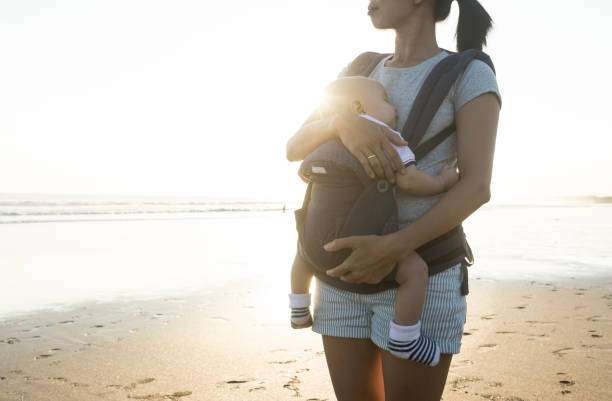
Advantages include:
Gentle and gradual : The movements are not intense and are suitable for early postpartum physical recovery.
Core and pelvic floor strengthening : Targeting the areas that need the most recovery after childbirth, yoga movements and breathing can effectively promote functional recovery.
Psychological adjustment : Having your baby accompany you during exercise can relieve loneliness and anxiety, making it easier to persist.
Sustainability : Because the baby is involved, mothers can incorporate exercise into their daily lives, and the long-term effects are more obvious.
Just 10-30 minutes a day is enough, and you can practice during your baby’s nap or quiet time, and proceed step by step.
What is Baby Holding Yoga and its specific movements and operations
Baby yoga is when a mother holds her baby in her arms or in a sling while practicing yoga. Through gentle movements and breathing, the baby’s body recovers while strengthening the parent-child attachment. Common movements include:
Breathing and relaxation : Hold your baby in a sitting position or carry him/her on your back, take a deep breath, relax your shoulders and neck, and let your baby feel the rhythm of your breathing.
Pelvic Tilt/Gentle Rocking : Gently tilts the pelvis forward and backward, activating the core and pelvic floor muscles while your baby feels a gentle rocking sensation.
Cat-cow pose : Four-point support, the spine bends and stretches up and down, relieving tension in the waist, back, shoulders and neck. The baby feels gentle rocking in the forearm or carrier.
Sitting meditation : Hold your baby with your eyes closed or look at the baby gently, do short breathing exercises, regulate your emotions and enhance parent-child interaction.
Simple squats/stretches : Hold your baby and squat slightly or stretch your arms to develop leg strength and core stability.
TIP S : Avoid high-intensity movements such as jumping, handstands, or excessive twisting. Keep it comfortable and slow, and keep your baby securely fixed.
The auxiliary role of baby carrier
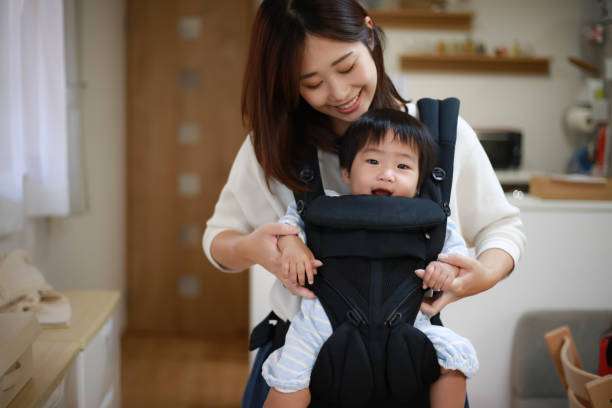
A baby carrier gives mothers more freedom of movement and greater stability, reducing strain on their arms and back while ensuring their baby’s spine and hips are supported and positioned safely. When choosing a baby carrier, consider its ergonomic design and breathable, soft material.
Expert advice and safety reminders
Obstetricians and rehabilitation physicians generally recommend that mothers who have delivered vaginally begin light exercise around six weeks after delivery, and those who have delivered by cesarean section should start after eight weeks. Ideally, the practice should begin after a doctor confirms a satisfactory recovery. Each session should last 20–30 minutes to avoid excessive fatigue.
Also, consider the environment: use a non-slip yoga mat, maintain a quiet and comfortable environment, and avoid any sharp or dangerous objects. During practice, monitor your baby’s reactions and pause immediately if they cry or become uncomfortable.
Benefits of Baby Yoga for Babies
Don’t think that yoga is just an exercise for mothers, babies can also benefit from it.
1. Secure attachment : In the mother’s arms or in a sling, the baby can feel the familiar heartbeat and breathing. This closeness can strengthen their sense of security and attachment.
2. Sensory stimulation : Gentle movements, breathing rhythm, and body swaying stimulate the baby’s vestibular system and help develop their sense of balance and space.
3. Parent-child communication : During the exercise, eye contact, smiles, and verbal interactions between mother and baby are key factors in early language and emotional development. For babies, this is not just an “exercise,” but an experience of deep communication.
Summarize
Baby-in-hand yoga is more than just exercise; it’s a form of companionship and a ritual. The first time I tried it, I was a little nervous: I worried I wouldn’t do the movements right, and I worried my baby wouldn’t cooperate. But as I gently performed pelvic tilts on my back, he quietly leaned against me and slowly fell asleep. At that moment, I realized this wasn’t just exercise; it was a time of reassuring intimacy.
Postpartum recovery is not just about repairing yourself, it can also be a gentle journey completed with your baby, and the baby carrier makes this parent-child practice safer and easier.