Baby Carrier Analysis: 5 Amazing Micro-Behaviors That Help You Understand Your Baby’s Curiosity

An infant’s growth is full of unknowns and surprises, and parents often find it difficult to fully capture their baby’s subtle behaviors as they explore the world in daily life. However, using a baby carrier allows parents to closely observe their baby’s body movements, gaze direction, and emotional responses, thus gaining a better understanding of their curiosity and exploratory behavior. This article will delve into five amazing micro-behaviors observed through a baby carrier and explore the psychological and developmental significance behind these behaviors, helping parents better accompany their baby’s growth.
I. Body Micro-Adjustment: The First Step in Exploration
When babies are gently held in a baby carrier against their parents’ chest or back, their bodies begin to make subtle adjustments. You might notice slight swaying or stretching of their arms, legs, or head. These movements, though minute, are the first steps babies take in exploring the world. Through these fine motor adjustments, babies learn to perceive their surroundings and understand concepts like distance, angle, and direction. The baby carrier provides a safe and supportive environment, encouraging babies to experiment with these small movements, while parents can observe and guide their development.
These subtle behaviors not only demonstrate a baby’s physical coordination but also reflect their curiosity about the environment. For example, when a baby reaches out to touch their parents’ clothes or surrounding objects, they are exploring textures, temperatures, and shapes. These seemingly simple actions are actually an important part of sensory development and a sign of a baby’s gradually improving cognitive abilities.

II. Eye Tracking: A Window to Curiosity
With a baby carrier, parents can clearly see what their baby’s eyes are focused on. Eye tracking is a very important micro-behavior that shows a baby’s interest in external stimuli and the level of their attention. You might notice that your baby’s eyes quickly move and focus intently when they see bright-colored objects, moving toys, or your facial expressions.
Eye tracking not only helps babies learn to process visual information but also promotes the development of neural circuits in the brain. Research shows that infants can establish early social cognitive patterns by observing their parents’ facial expressions and movements. For example, when babies see their parents smile, they may imitate the smile, thus learning emotional expression. This micro-behavior reflects a baby’s interest in social interaction and is an important manifestation of curiosity.
III. Finger Exploration: The Emergence of Fine Motor Skills
In a baby carrier, a baby’s fingers often make various tiny exploratory movements. They might gently grasp the hem of their parents’ clothing, a toy, or even the invisible space in the air. These movements may seem unintentional, but they are the beginning of fine motor development. Through finger exploration, babies practice hand-eye coordination, grasping ability, and tactile sensitivity.
Micro-coordinates of the fingers also reveal a baby’s cognitive development level. For example, when babies try to grasp objects of different shapes, they are learning about cause and effect and physical properties. These micro-coordinates not only help babies understand the relationships between objects but also lay the foundation for future fine motor skills and learning abilities. Parents can observe these movements and choose appropriate toys or environments to further stimulate their baby’s interest in exploration.
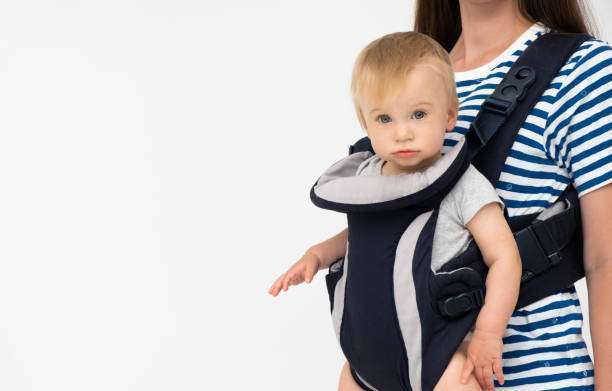
IV. Facial Expressions: The WeChat Account of Emotions and Cognition
A baby’s facial expressions are an important window into their psychological state. When using a baby carrier, parents can closely observe subtle changes in their baby’s eyebrows, mouth, and eyes. These expressions often reflect the baby’s emotional response to new environments or things, such as surprise, confusion, joy, or anxiety.
Facial micro-behaviors are not only expressions of emotion but also closely related to cognitive development. For example, when babies see a new object, they may frown or open their mouths wide—a natural reaction of the brain when processing new information. By observing these micro-signals, parents can understand their baby’s needs and psychological state in a timely manner, thus providing appropriate support and guidance.
V. Sound Experimentation: The Beginning of Language and Communication
Baby carriers also allow parents to capture their baby’s vocal attempts. This includes babbling, soft laughter, gurgling, or imitating sounds from the surrounding environment. Vocal attempts are an early sign of language development and social communication and are one of the important ways babies explore the world.
Through sound, babies learn cause and effect and communication skills. When they make sounds and get their parents’ attention, they feel a sense of responsiveness, which enhances their willingness to communicate. Baby carriers provide a safe platform for observation and interaction, allowing parents to respond promptly to their babies’ vocal attempts and encourage them to continue exploring and expressing themselves.
Conclusion
A baby carrier is not only a convenient tool for parents when they’re out and about but also an excellent tool for observing their baby’s subtle behaviors. From body micro-adjustments to eye tracking, from finger exploration to facial expressions, and even sound attempts, these five micro-behaviors showcase a baby’s curiosity and exploratory spirit. Through close observation and active interaction, parents can better understand their baby’s needs and interests, promoting their physical, cognitive, and emotional development.
In daily life, when using a baby carrier, take the time to observe your baby’s subtle movements and record their discoveries and reactions. This not only helps with early education but also deepens the parent-child bond, allowing your baby to freely explore the world in a safe and warm environment. Every tiny movement carries the secrets and surprises of your baby’s growth, allowing parents to experience the most precious moments of companionship in their lives.