Baby carrier: 4 points of role reversal – parents transform from caregivers into “carriers”

Baby carriers , as an important component of modern parenting tools, have evolved from simple auxiliary tools into parenting equipment that combines safety, functionality, and emotional connection. Parents using baby carriers not only free their hands but also experience a subtle shift in identity on both psychological and physical levels. In traditional parenting scenarios, parents are caregivers, bearing comprehensive protective responsibilities.
The emergence of baby carrier has subtly reversed this role: parents transform from mere caregivers into the baby’s “vessel,” carrying not only the child’s body but also their safety and comfort, and even, to some extent, becoming a bridge for the child to perceive the outside world. This role reversal not only affects parents’ physical sensations but also profoundly changes the psychological structure of parent-child interaction and the parenting experience.
This article will focus on four role reversal points in the daily use of baby carriers , analyzing how parents transform from traditional caregivers to “carriers,” and exploring the profound impact of this shift on biomechanics, emotional relationships, and parenting behaviors. Through an in-depth analysis of the design concepts and usage scenarios of modern baby carriers , we can gain a more comprehensive understanding of the unique value and significance of baby carriers in family life.
I. The role change of bearing the weight of the body
When parents use a baby carrier for the first time , the most immediate feeling is the physical weight-bearing experience. In traditional childcare, parents usually hold their child or place them in a stroller, with relatively limited physical involvement; their arms, waist, and shoulders only bear the weight for short periods.
However, the design of a baby carrier secures the child to the parent’s chest or back, making the parent’s shoulders, waist, and even core muscles the support platform for the baby. This weight-bearing is not just a physical load, but also a transformation of identity—the parent’s body changes from an actively operated tool to a safe support structure for the baby’s body.
In this role transition, parents need to readjust their posture to accommodate the weight. Baby carriers , with their ergonomically designed shoulder and waist straps, distribute the baby’s weight evenly across the parents’ bodies, reducing localized pressure. However, even with the most scientifically designed system, parents will still feel the impact of the weight on their bodies. This experience subconsciously makes them realize that they are no longer just caregivers, but rather the infrastructure for their child’s safety and comfort. This sense of physical support creates a new interaction pattern between parents and children: the child is closely held against their body, while the parents become the mobile platform for the child to explore the world.
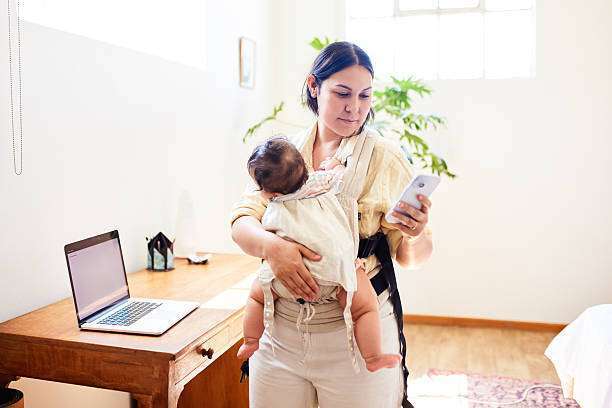
II. Interaction Reversal in Emotional Attachment
A baby carrier is more than just a physical support tool; it creates an emotional identity reversal. Traditional baby holding usually involves short periods of physical contact, while a baby carrier extends and sustains this contact, maintaining a close physical bond throughout daily activities. This prolonged and continuous contact allows parents to unconsciously become the core of their child’s emotional attachment.
This emotional connection is not only reflected in warmth and comfort, but also in the shift in the parents’ psychological roles. Parents no longer simply provide care through physical actions, but rather maintain the child’s comfort and safety with their entire body. Every movement, every turn, directly impacts the infant’s sense of stability and security. This high level of emotional attachment strengthens the parents’ role as the “carrier,” deeply integrating their identity as caregivers with their physical role as the vessel.
Parents receive unique emotional feedback in this process: the child’s stability, smiles, and interactions become significant sources of psychological satisfaction for the parents themselves, while also allowing them to experience an unprecedented sense of responsibility and participation in childcare.

III. Role Adjustment in Daily Behavioral Patterns
baby carriers has also profoundly impacted parents’ daily behavior patterns. In traditional childcare, parents frequently need to stop what they are doing at home or when out and about to pick up their child or push a stroller, a pattern that easily leads to a break in time and energy. The advent of baby carriers allows parents to complete multiple tasks while on the move, such as doing housework, shopping, or even outdoor activities, while the child is safely attached to the parent’s body.
The direct result of this convenience is an adjustment in parents’ behavior patterns: their bodies are not only the executors of actions, but also become a supporting platform for the child’s activities and movement.
This shift in parental identity has both psychological and physiological impacts. Parents need to maintain balance and stability in daily activities, making them more attentive to their posture and center of gravity, as well as the child’s safety. The presence of a baby carrier transforms parental behavior from a primarily hand- and visually-based mode of operation to a more coordinated mode centered on holistic perception and control. The extensibility and continuity of bodily movements gradually accustom parents to maintaining the child’s comfort while moving, further reinforcing their perception of the carrier role.
IV. Identity Projection in Social Interactions
Baby carriers not only create an identity reversal within the family but also influence parents’ social roles in public. In traditional childcare settings, parental care primarily occurs within the private sphere of the family, with low social visibility.
However, the use of baby carriers extends this behavior into public spaces, making the parents’ “carrier” identity perceptible to external observers in social interactions. When parents carry their babies, whether on the street, in shopping malls, or on public transportation, their physical carrying function and sense of responsibility are directly visible. This visibility subtly projects the parents’ role into social perception.
baby carriers in public , they consciously or subconsciously adjust their posture and behavior to ensure the baby’s safety and comfort. This behavioral adjustment further reinforces the carrier’s identity and also influences the parents’ self-perception: they are not only caregivers but also bearers of the child’s safety and social interaction experiences. This identity projection gives parents a greater sense of responsibility and presence in the social environment, while also enhancing the social value and visibility of their parenting behaviors.

Conclusion
By analyzing the four identity reversal points of the baby carrier , we can clearly see that the baby carrier is not only a practical tool, but also a vehicle for psychological and behavioral role transformation. In the process of using the baby carrier, parents gradually transform from traditional caregivers into the baby’s physical and emotional “vessel,” taking on multiple responsibilities for safety, comfort, and emotional support. This identity reversal not only changes the parents’ physical perception but also alters their emotional attachment, daily behavioral patterns, and social interactions.
modern baby carriers have evolved based on this multi-dimensional role transformation. Through scientific weight distribution, comfortable fixation mechanisms, flexible adjustment systems, and ergonomic structural design, baby carriers not only allow parents to easily bear the physical burden but also enhance their psychological and emotional involvement in the childcare process. Understanding the deeper value of this role reversal helps parents use baby carriers more effectively, achieving greater security, comfort, and emotional satisfaction during childcare.
Baby carriers have not only changed parenting methods, but also profoundly altered parents’ perception of their role in the parenting process. Parents shift from being mere caregivers to becoming facilitators and bridges, making parenting more efficient, strengthening emotional connections, and providing parents with an unprecedented sense of responsibility and fulfillment. Understanding and accepting this role reversal is a crucial prerequisite for modern parents to achieve their best parenting experience and is also the key to maximizing the value of baby carriers .