a baby carrier for a family with twins ? A complete guide to traveling with multiple babies

For families with twins or more, taking them out can be a battle. Two hands are never enough; you need to comfort a crying baby while also freeing up space to hold a bag, open doors, or push a stroller. A suitable baby carrier can be like an extra pair of “free hands,” significantly easing the burden and making outings more organized and effortless. I remember a friend of mine who had just given birth to twins. Every outing felt like a battle. It wasn’t until she switched to a suitable baby carrier that she finally realized, “The feeling of having both hands free is so precious.” But with so many baby carriers on the market , how should families with twins choose?
1. Types and differences of twin baby carriers
Baby carriers designed for multiple babies on the market are broadly divided into two categories: two-person, all-in-one , and single-person, combination .
A two-person, all-in-one baby carrier is a structured design that can accommodate two babies simultaneously, typically with a front and back compartment, or a front-to-side or side-to-side compartment. Its advantage is balanced weight distribution, making it convenient for caring for two babies simultaneously without the need for additional strap adjustments. However, its disadvantages are its large size and slightly complicated donning, making it less suitable for parents with smaller stature or limited strength.
A single-person combination baby carrier offers greater flexibility, allowing parents to carry one each, or for one person to carry two (front-to-back). This method offers the advantage of flexibility and ease of adjustment, as it allows for easier cleaning and storage. However, if the weight difference between the babies is significant, the carrier may experience an unstable center of gravity or imbalanced posture.
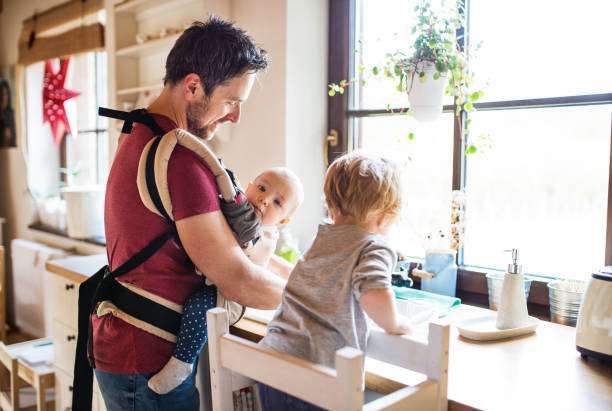
2. The core factors that should be paid attention to when choosing
First, the load-bearing and support structure are important. Twins share double the weight, so the material and seams must be sturdy, with wide shoulder straps and a thick waist pad to distribute the pressure. It’s recommended to choose a brand with safety certifications, such as a baby carrier that meets EN or ASTM international standards , for greater assurance of strength and stability.
Second, ergonomic design is crucial . A suitable carrier should not only be comfortable for parents but also help maintain a natural C-shaped curve in the baby’s spine during critical developmental periods. The leg support should create an “M-shaped” sitting position, avoiding suspension or pressure.
Finally, ventilation and comfort are important . Multiple babies mean more combined body heat, making summers more stuffy. Therefore, removable and washable mesh or breathable cotton fabric is particularly important. If traveling in colder regions, choose a model with a lining or thermal hood.
Finally, adjustability is crucial . Babies’ weight and height fluctuate rapidly, so the ability to flexibly adjust the shoulder straps and waist circumference to suit their growth is crucial to a carrier’s longevity.
Baby carrier matching tips for actual travel
For two parents traveling together, a “two-person combination” design is recommended: one person carries the baby from the front, while the other carries the baby from the back. This ensures eye contact and reduces the possibility of simultaneous crying. This not only shares the weight but also makes it easier to take turns caring.
For solo travelers, try a “one-carry, two-carry” design to balance the weight front to back. Be careful to adjust the shoulder straps to avoid pressure. Walk slowly and avoid bending or turning significantly. Use a stroller if necessary. Furthermore, families with twins often need to carry more items. Choose
a baby carrier with storage pockets or backpack compatibility for easy access to tissues, pacifiers, or water bottles, enhancing overall convenience.
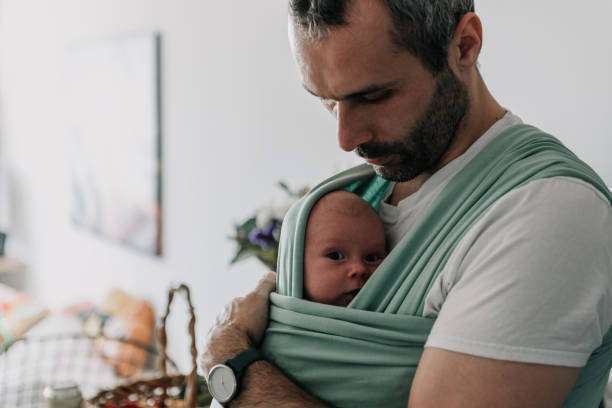
Recommendations for choosing baby carriers at different ages
Since newborns’ spines are not yet fully developed, it’s recommended to use a baby carrier with a reclining position or head and neck support for safety and comfort. After four months, when the baby’s neck support improves, you can gradually try an upright or outward-facing carry, but this shouldn’t be done for extended periods.
For heavier babies over eight months old, a split- body or climbing-style baby carrier is recommended . These are more stable, effectively reducing back strain and making them suitable for extended outings.
5. Make the Double Journey Easy and Fun
Traveling with two babies doesn’t have to be chaotic or stressful. Choosing the right baby carrier and mastering its use can create many heartwarming moments. With two babies snuggled in your arms, watching them babbling and reaching for each other, the burdens of parenthood seem instantly healed. The world of twins offers double the challenges, but also double the joys. With the right approach and thorough preparation, traveling becomes more than a “task”—a gentle journey.