Body trust memory: From a psychological perspective, why baby carriers can create a sense of security

Before babies can verbally express the world, physical contact is their earliest form of communication. For newborns, being held, held close, and gently rocked is not only physically comforting but also a psychological validation of acceptance. The baby carrier is an extension of this silent communication, allowing intimacy uninterrupted by household chores, time, or space, while allowing children to learn their first lessons of trust in the embrace of their parents.
1. From physical contact to psychological safety: the starting point of trust
Psychologist John Bowlby’s attachment theory states that infants develop a “secure attachment” in the earliest stages of life through interactions with their primary caregiver. This attachment isn’t an abstract concept, but rather a physical memory formed through every act of being held, responded to, or patted on the back. Baby carriers allow this close contact to continue—they allow babies to find a reassuring rhythm in the sound of their parents’ breathing and heartbeats, while also making it easier for adults to detect subtle changes in their children’s emotions.
Over time, these daily encounters will leave a mark in a child’s subconscious: the world is gentle and others are reliable. This is the beginning of a “memory of trust.”
2. Why are children who are carried on others’ backs more stable?
Studies have found that babies who are frequently held physically are better able to self-regulate when faced with unfamiliar situations. They cry less, fall asleep faster, and are more receptive to new things. This is due to a neurological response: when the body senses consistent, stable, and safe contact, cortisol (the stress hormone) levels in the brain decrease, while oxytocin production increases, promoting relaxation and attachment.
In other words, a baby carrier not only makes care more convenient but also serves as an “emotional regulation device.” It allows a child’s physiological system to gradually learn: “When I am close to others, I am safe; when I am comforted, the world responds.” This experience is repeatedly verified and sustained in subsequent interpersonal relationships.
3. Parents’ bodies are also learning to trust
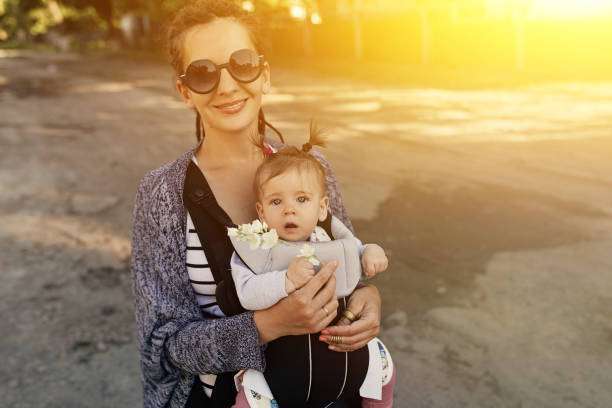
Interestingly, the effects of a baby carrier aren’t limited to the child. For parents, the close contact between their bodies and their child triggers oxytocin, shifting the brain into “caregiving mode.” Many parents find themselves feeling more calm, patient, and connected when using a baby carrier . This isn’t just a psychological response; it’s a natural bodily response.
In psychology, there’s a concept called “co-regulation”: When an emotionally stable caregiver maintains contact with a child, the child gradually develops their own emotional regulation abilities through imitation and resonance. Baby carriers make this co-regulation more natural and frequent. Thus, trust isn’t a one-way gift, but a two-way flow—adults and children grow together at each other’s pace.
4. Touch is the earliest memory and the deepest
As adults, we may no longer remember the feeling of being carried, but our bodies do. Psychologists often say that early experiences are stored in the body as “implicit memories”—a form of perception that requires no language. When adults find it easy to form close relationships, express their needs, and trust that others are not hostile, it’s likely due to this early experience of “safe touch.”
The baby carrier offers not only convenience and hands-free practicality, but also the reaffirmation of “I am in your heart, you are in my world.” That warmth, heartbeat, and breath will become a child’s earliest foundation of security throughout their life.
5. Make intimacy a daily routine
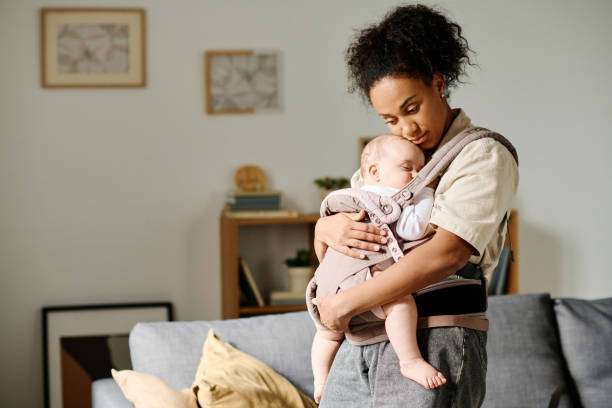
In the fast-paced world of modern life, parents are often swept up in “scientific parenting” and data, neglecting the wisdom of the body. In fact, the significance of a baby carrier lies not simply as a parenting tool but in the space it creates for intimacy. When we carry our children, we not only help them sleep more peacefully but also remind them—no matter how big the world, I’m always by their side.