From stride to posture: Baby carriers and strollers reshape parents’ body rhythms

Taking a child out may seem simple, but it subtly reshapes a parent’s relationship with the world. Whether holding a child close to their body in a baby carrier or slowly pushing a stroller, each method influences the parent’s body rhythms—their pace, posture, and even breathing rate all undergo subtle changes.
1. The moment the body is retuned
a baby carrier for the first time , they’re often surprised by the changes in their body. With the child’s weight against their chest or back, their center of gravity naturally shifts downward, making their steps lighter and more stable. The carrier automatically slows them down, each step imbued with a sense of protection and awareness. This close, weighted feeling forces the body to regain its balance and allows parents to learn a new “walking rhythm”—neither a hurried commute nor an aimless stroll, but a rhythmic movement that breathes with their child.
When a parent pushes a stroller, the body’s rhythm takes on a completely different form. Arms slightly extended, backs straight, the resistance of the stroller and the friction of the ground unconsciously adjust the posture. The stride may be longer and steadier, but without the warmth of a child’s body, there’s more space and perspective. A stroller provides a “managed distance,” allowing the child to rest quietly in the stroller while the parent has ample space to survey the world around them. This distance restores some freedom to the body, while simultaneously allowing the mind to focus more on observation and protection.
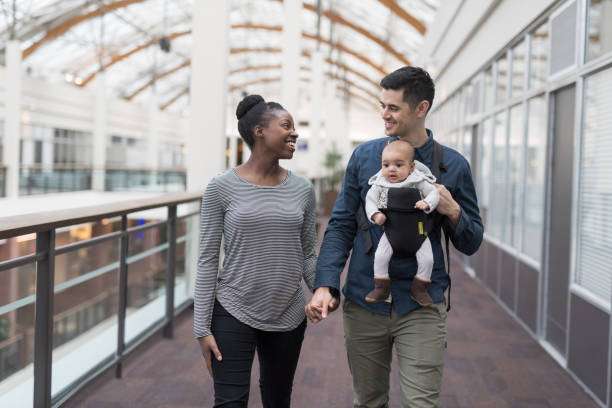
2. Straps: slow rhythm, deep connection
The most significant feature of the baby carrier is that it connects parents and children to form a “community.” Whether walking, doing housework, or even traveling, the child’s body remains in sync with their parents’. This synchronicity allows one to reconnect with their “body memory”—the child falls asleep peacefully to the sound of their parents’ heartbeat and breathing, while parents gradually find a new center in their bodies in the process.
Psychological research indicates that infants begin to develop a sense of body movement as early as a few weeks after birth. Carried babies can gain a sense of security through the rhythm of their steps and the rise and fall of their breathing. This sense of security can even influence their emotional regulation and social trust as they grow older. For parents, baby carriers offer more than just convenience; they offer a new way to understand the body—no longer just their own, but a vehicle for resonance with their child.
Many parents find their backs and waist become stronger and their gait more natural after long-term use of a baby carrier. This physical training isn’t deliberate; it develops naturally through daily “synchronization.” Every lean, bend, and support is the body adapting to its new center of gravity, a gentle growth of strength.
3. Baby stroller: stable posture and free extension
If baby carriers emphasize “fitting the body,” strollers are more like “extensions of space.” Traveling with a stroller allows parents to stretch their bodies more freely, their steps more rhythmic, and their posture more upright. Especially when navigating cities, strollers make travel more efficient and reduce the fatigue of carrying heavy weight for extended periods.
At the same time, strollers also promote a more extroverted posture. Instead of looking down at their child, parents perceive their child’s well-being through sight and hearing. This shift in posture also alters interaction. A parent using a stroller is often more open to communication and interaction with others, and this “open body language” allows them to maintain a certain sense of self-paced parenting.
Modern stroller designs increasingly emphasize ergonomics—details like adjustable pushbars, shock-absorbing tires, and one-handed folding help parents find a balance between childcare and physical comfort. Strollers allow the body to return to the rhythms of modern life, rather than being completely dominated by childcare.

4. The Fusion of Two Rhythms: Dual Adaptation of Body and Mind
In fact, most parents will switch freely between the two – using a carrier when going out for a short walk, and a stroller when going out for a long distance or shopping. This switch is not a choice between convenience and burden, but a balance between body and mind.
The baby carrier rediscovers the value of slowness: every breath, every step echoes with a heartbeat. And the stroller reminds us of the importance of stability: while caring for others, the body also needs to be nurtured. These two tools are not in opposition; rather, they work together to shape a new body rhythm for parents—one that combines intimate intimacy with outward relaxation.
5. Conclusion: Body is the first language of parenting
Whichever method you choose, parents’ bodies grow with their children. The warmth from their backs, the gentle rocking of their arms while pushing the stroller, the slower pace of their steps, are all part of the true rhythm of parenting life.
From gait to posture, from weight to balance, baby carriers and strollers have not only changed the way we travel but also reshaped how parents view their bodies. It’s a new “body language”—steady yet gentle, slow yet powerful. It transforms parenting into more than just a nurturing process; it becomes a journey of mutual connection between the body and the child.