The perception of growing up carried: How baby carriers shape spatial and movement awareness

Many parents see a baby carrier as simply a hands-free tool. However, from a developmental and sensory integration perspective, babies undergo a silent sensory training process while being carried. Their sense of balance, orientation, and spatial awareness are all quietly shaped by this close proximity and movement.
1. Infants’ spatial awareness begins with “body experience”
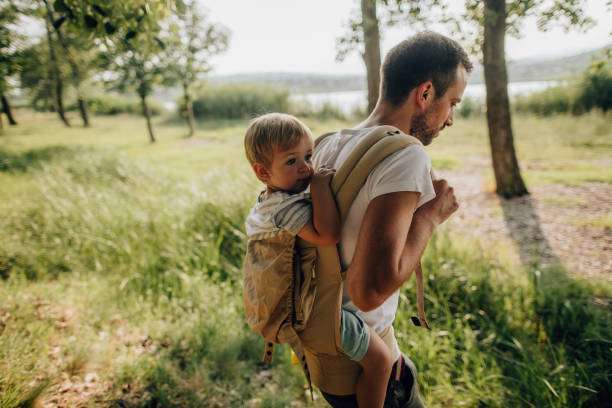
Spatial sense isn’t innate, but rather is gradually developed through the body’s movement in space. For infants, their earliest sense of “space” isn’t the size of the room, but rather the distance, posture, and movement between the body and the caregiver. When carried on an adult’s back, with every step and turn, the vestibular system in the inner ear, muscle pull, and skin touch provide a wealth of spatial signals.
This continuous input helps them develop a preliminary understanding of “body relative space,” knowing they’re being moved, rotated, or swung. This inherent perception forms the foundation for future body control, understanding direction, and balance.
2. Vestibular and proprioception: “invisible training”
The vestibular system, responsible for sensing head position and acceleration, is central to an infant’s balance and postural control. The dynamic environment of a carrier—the ups and downs, the gentle swaying—is precisely the most sensitive and effective form of stimulation for the development of the vestibular system.
Simultaneously, proprioception is constantly awakened. The baby’s limbs are wrapped in the carrier, maintaining slight tension with the parent’s body. This secure embrace, yet the ability to adjust slightly, allows muscles and joints to sense pressure, direction, and support, a precursor to later movements like rolling over, sitting, and crawling.
3. Movement Awareness: From Passive Movement to Active Exploration
Studies show that babies who frequently use slings develop a sense of coordination more quickly in their motor development. They understand the relationship between their bodies and gravity earlier and more easily master how to adjust their posture.
As babies transition from being passively moved to actively stretching their arms and legs and finding balance, the brain’s motor cortex and cerebellum are “encoding” this experience. In other words, the experience of being carried is transformed into the underlying algorithms for action—as they are held, rocked, and turned, they learn how to orient themselves in space.
4. Emotions and Security: The Psychological Pivot of Perceptual Development
The relationship between space and emotion is often overlooked. The constant closeness provided by a carrier provides infants with a stable sense of security, and the synchrony of skin-to-skin contact and heartbeat rhythm regulates stress responses.
When infants are emotionally stable, their brains are better able to process external stimuli, increasing their attention and willingness to explore. The development of spatial and motor awareness is therefore not an isolated physiological process, but rather the result of the coordinated growth of the body and emotions.
5. Usage suggestions: Let the sling truly become a “development assistant”
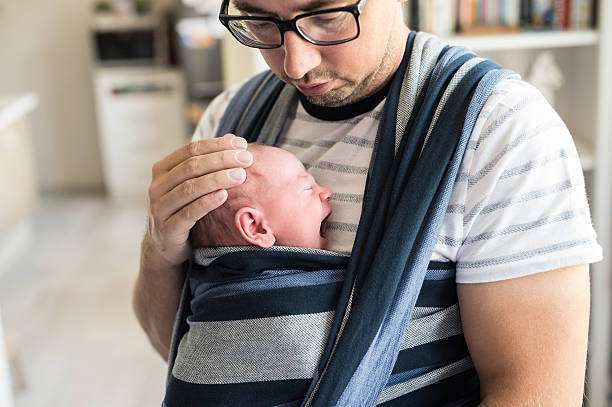
Choose a style that provides full support : it should allow the baby’s hips to open naturally, the spine to form a C shape, and ensure that the body is evenly stressed.
Moderate activity and avoid static carrying : Let the baby get diverse dynamic stimulation in the rhythm of parents’ daily walking, turning, and going up and down stairs.
Maintain visual and language interaction : Being carried on the back does not mean isolation. Parents can strengthen the baby’s spatial understanding by talking and describing actions.
Observe for signs of fatigue : If the baby becomes irritable, stiffens, or sweats excessively, the baby should be promptly adjusted in posture or given a rest to avoid overstimulating the vestibular system.
Conclusion
A baby carrier isn’t just a tool for raising children; it’s a “dynamic sensory environment.” In this environment, babies’ sense of space, movement, and security develop simultaneously. The time they spend being carried is, in fact, their earliest “physical classroom.”