Hidden risks in using baby carriers : How to avoid falls, compression and suffocation accidents

baby carriers allows parents to free their hands while allowing babies to enjoy the security and warmth of being close to their parents’ bodies. Whether navigating city streets, shopping malls, or coaxing babies to sleep at home, baby carriers have become an almost indispensable tool in modern parenting. However, the more commonly used items are, the more likely they are to overlook their potential risks. Falls, compression, and suffocation are among the most underestimated, yet dangerous, hazards associated with baby carrier use. To truly achieve “safe intimacy,” we must first understand how these risks occur and how to prevent them.
1. Fall risk: the most common and most easily overlooked accident
Many parents assume that as long as the baby carrier is secure, they won’t fall. However, falls often occur when the carrier is worn improperly or the buckles are loose . For example, the shoulder straps may not be adjusted properly, shifting the center of gravity; or the carrier may not support the baby’s head, neck, and hips when the parent bends over, causing the baby to slip.
Key to prevention:
Check the fastening points. Before each use, make sure that buckles, zippers, Velcro, and other parts are intact and that the fabric is not worn or loose.
Keep the center of gravity close to the body. The baby should be close to the parent’s chest, not hanging out. This helps reduce shaking.
Avoid dangerous movements. Be especially careful when bending over, running, or climbing stairs. Support your baby or sit down if necessary.
Newborns should pay special attention to support. Newborn babies’ necks are not fully developed yet, so it is important to choose a style with head and neck support.
One detail can determine safety: if parents can kiss their baby’s forehead by lowering their heads, it means that the height and fit are usually appropriate.
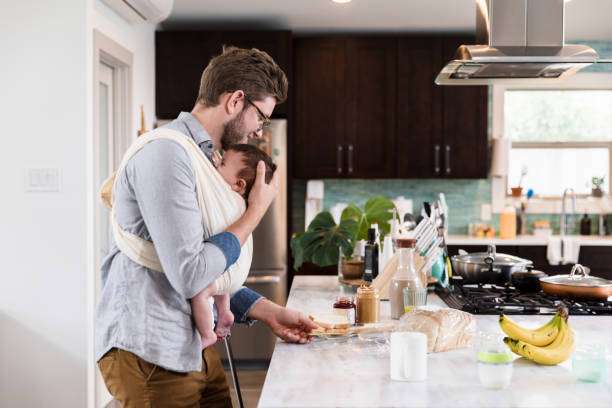
2. Compression Risk: Chronic Dangers from Incorrect Posture
Compression risks often don’t occur instantaneously, but rather result from prolonged improper posture. For example, a baby’s legs being forced together or hanging can easily lead to abnormal hip development, or their head being pressed against their chest, restricting their breathing.
Key to prevention:
The baby’s knees should be higher than the hips, and the thighs should be naturally apart, forming an “M”-shaped sitting posture, which is key to hip joint health .
Avoid neck folding. The baby’s chin should not be pressed on the chest, and there should be at least an adult finger’s space between the chin and the chest.
Observe the baby’s breathing and complexion. If the baby’s face turns red or blue or if they are breathing rapidly, adjust the baby’s position or remove the baby from the carrier immediately.
Limit usage time. Try to avoid using it for more than an hour at a time, especially in hot or poorly ventilated environments.
Using a baby carrier for a long time will not only put pressure on the baby, but also on the parents’ shoulders, necks, and waists. Proper rest and adjustment can ensure that intimacy does not come at the expense of the body.
3. Suffocation Risk: The “Shadow” of Close Contact
The biggest appeal of slings is that they keep babies close to their parents’ chests, but this closeness can also be risky if not handled properly. This is especially true when carried face-inward . Newborns have small heads and weak necks, so if clothing or the parent’s body blocks their mouth and nose, they can suffocate.
Key to prevention:
Keep the airway open. The baby’s face should be turned to one side, with the nose and mouth exposed at all times.
Avoid heavy clothing. When using a sling in winter, do not let scarves or coats cover the baby’s face.
Check your baby’s condition at all times. Your baby should be able to breathe freely and move naturally. If your baby is resting abnormally or has a fever or excessive sweating, check them immediately.
Use a qualified carrier. Choose a brand that has passed safety certification and follow the instructions for wearing the carrier for different ages.
An advice from an international parenting expert can serve as a guideline: “Keep your baby close enough to kiss, and visible at all times.” – It must be both intimate and visible.

4. Emergency Response and Self-Inspection
Even with the most careful approach, it’s difficult to guarantee complete safety. It’s also important to understand basic first aid knowledge :
If your baby falls out of the carrier, you should stay calm and do not pick him up immediately . First observe whether his crying is normal and his breathing is smooth, and then check for any external injuries or swelling.
If compression or breathing abnormalities are suspected, the harness should be removed immediately, the airway should be kept open , and medical assistance should be sought if necessary.
the habit of self-checking before and after each use can also reduce the risk of accidents:
Check whether the strap structure is deformed;
Test the buckle firmness;
Check that the baby’s posture is symmetrical and the face is clearly visible.
Conclusion
a baby carrier add a touch of soft connection to parenting. But true security doesn’t come solely from intimate contact; it stems from careful use and attentive observation.
In every embrace, the carrier conveys warmth, not risk.