5 truths about baby carrier’s body boundaries: Strong reminders that are easily overlooked in the parenting process

Among the various tools and methods of parenting, the baby carrier is a seemingly simple choice that actually brings about profound changes. Many parents think that a baby carrier is just about freeing their hands, letting their baby be close to their heartbeat, or making outings easier.
But when you actually use a baby carrier for a long time , you will find that it changes much more than just the way you move around; it reshapes the sense of boundaries between you and your baby, between you and the outside world, and even between you and your own body. The baby carrier is like a mirror that reflects relationships; it magnifies the details that people usually overlook and pulls those bodily awarenesses that have been submerged by the fast pace of life back into your attention.
Many parents never consider the importance of physical boundaries before raising a child, nor do they realize how these boundaries shape their emotions, stress, and daily experiences. But when a baby is held close to the center of the body, and when that fragile life is synchronized with the parents’ breathing and steps, those previously ignored bodily signals suddenly become clear.
Touches from the outside world, the approach of relatives and friends, the behavior of strangers in public spaces, and even some of the parents’ own postures and neck and shoulder pressures, all become re-perceived because of the baby carrier .
This article will take you on a deep dive into five key truths about body boundaries revealed by baby carriers . These truths are often the most easily overlooked yet most crucial reminders in the parenting process. They can not only help you better protect yourself and your child, but also make your parenting journey smoother and more comfortable.
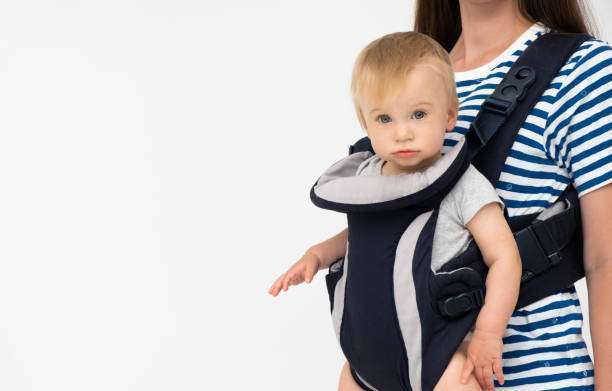
First, it makes you realize for the first time that your body is not just a “tool”.
After having children, many parents subconsciously view their bodies as a kind of “childcare organ.” You need to hold the baby in your arms, carry the diaper bag on your shoulders, support all the weight with your back, bend over to shower, squat down to clean, and constantly move household items. Over time, the body seems to become a mechanical system operating for the family and children.
But when you start using a baby carrier , especially when you hold your baby close to your chest, you’ll examine your body from a new perspective for the first time. You’ll suddenly realize that the carrier not only frees your hands, but it also requires you to re-evaluate your core muscles, lower back strength, shoulder tension, and breathing rhythm. In the past, you might have overlooked whether your posture was correct, but now you’ll have to pay attention to whether your standing posture is stable, whether your walking steps are balanced, and even simple turning movements become more conscious because of the baby’s weight.
The baby carrier transforms your body from merely a tool to serve your baby into a vessel that must be cared for and appreciated. You’ll begin to notice your fatigue points and realize that certain pains are reminders that you’re overexerting yourself. It helps you understand the first truth about the body’s boundaries: your body is not an unlimited resource, but rather an entity that needs to be protected and respected.
This awareness doesn’t come from theory, but from the moment your baby is close to your body. Their weight, their breathing, their body temperature make it impossible to ignore your presence. This process of rediscovering your own body is a crucial step that caregivers often overlook.

Second, baby carriers amplify the sense of closeness from others.
Many parents, before using a baby carrier , might not have paid much attention to how close others were, whether they would touch them, or whether they would encroach on their personal space. But when you hold your baby close to your chest, your physical boundaries suddenly expand. Your safety zone is no longer just yourself, but a softer, more vulnerable protective circle formed by you and your baby together.
You’ll find that when you’re standing in a queue, if the people behind you stand too close, even if they don’t bump into you, you’ll immediately feel uncomfortable. You’ll pay special attention to other people’s body language, especially in elevators, subways, or confined spaces. A baby’s position makes you more sensitive to every approach from the outside world; this isn’t tension, but alertness, a natural enhancement of your protective instincts.
This phenomenon helps you truly understand for the first time that the “safe zone” isn’t an abstract concept, but a practical physical need. When someone’s approach might threaten your baby’s safety, your sense of boundaries will quickly increase, and you’ll proactively adjust your position, turn slightly to the side, or maintain more space. You might not have paid much attention to physical distance in the past, but now you’ll be very clearly aware that this distance determines whether your baby is safe and whether you are relaxed.
that baby carriers help you understand is that body boundaries are essentially a protective mechanism, a fundamental limit that must be set when interacting with the outside world. It not only ensures your comfort but also guarantees your baby’s safety.
Third, your body becomes the baby’s “first space”.
In a baby carrier , the baby’s head rests against your chest, their ear close to your heartbeat, and their every breath is synchronized with your body. Unlike lying in a stroller where there is a distance between them and your body, the baby uses you as their most direct space. In the carrier, the baby sleeps, observes, is comforted, and experiences the world, while you become what Filipino psychologists call the “nest of the body,” the baby’s first and safest living space.
In this process, you will gain a completely new understanding of “intimacy”. Many people think that intimacy is a psychological feeling, but baby carriers allow you to experience that intimacy is a physical feeling, it is the baby’s need to rely on your body temperature, it is the rhythm you create for him with every step you take, and it is the tacit understanding that he moves with you when you lean over.
At the same time, you will begin to sensitively feel the “separation.” When you remove the baby carrier and put the baby in the crib or stroller, you will clearly feel a sudden emptiness in your body. That loss of weight makes you realize how close and dependent the baby was to you just moments before. Even if the baby doesn’t cry, you will notice the change in the distance between you.
that baby carriers help you understand is that intimacy is not abstract, but a concrete physical experience; separation doesn’t happen instantly, but occurs through physical separation. This understanding will profoundly influence how you understand parent-child relationships.
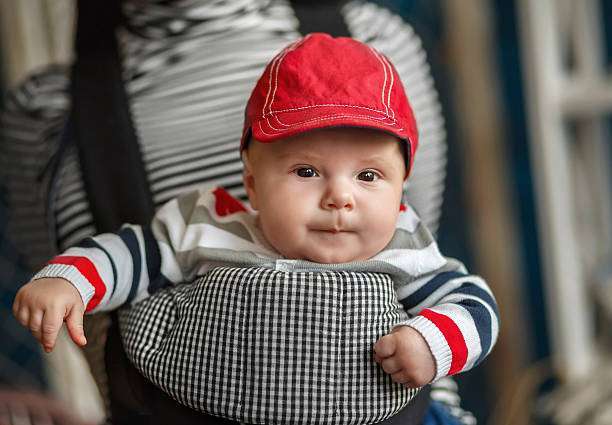
Fourth, understanding that “boundaries” is not a concept unique to psychology.
Many people, when they talk about boundaries, think of psychological rejection, communication styles, or interpersonal rules. But baby carriers show you that boundaries are first and foremost physical; it’s about being aware of how much you can and cannot bear, how long you can sustain yourself, and when you need to rest.
the baby carrier accumulates, especially as the baby grows. The pressure from the waist, shoulders, and back constantly reminds you that you can’t keep going indefinitely. Many new parents, due to their excessive involvement, often ignore their own fatigue, even believing that persevering is what makes a good parent. But the baby carrier makes it impossible to ignore your physical limits; it makes you understand that when your body starts sending warning signals, you must stop.
This pause is not giving up, but rather for a longer parenting journey. A baby carrier helps you understand that physical boundaries exist to protect you, your baby, and the parent-child relationship. Reaching your physical limits is not a failure, but a reminder that your body needs care, your emotions need regulation, and your rhythm needs to be respected.
baby carriers make you realize is that boundaries are not rejection, but a way to maintain intimacy. Your body is telling you that getting too close or becoming overly involved will make it impossible for you to consistently and stably care for your child.
Fifth, baby carriers help you re-understand your relationships with others.
When you’re carrying your baby and interacting with others, you become very sensitive to every touch from the outside world. For example, if a friend or relative wants to touch the baby’s head, a stranger wants to see the baby’s face, or a family member reaches out to hold the baby carrier, you’ll immediately judge whether these actions are within your acceptable range.
In the past, you might not have paid much attention to how close others got, or whether they needed permission to touch you or your baby. But now, because your baby is close to the center of your body, your body’s boundaries also become your baby’s boundaries, so you will begin to learn how to protect this shared space.
You will know clearly that some touches are acceptable to you because they are caring, supportive, and considerate; but some touches will make you instinctively tense up, even if the other person has no ill intentions, because those actions have crossed the boundaries you have set.
that baby carriers help you understand is that physical boundaries are not a rejection of the outside world, but a shared protective mechanism for yourself and your baby. You will be more courageous in expressing your needs, more natural in giving your baby space, and better able to understand who truly respects and understands you.
Conclusion
Baby carriers may seem like a simple tool, but they subtly help you rediscover your body, intimacy, and distance, as well as those often overlooked yet crucial boundaries in the parenting journey.
It reminds you that your body is not a tool, but an entity that needs to be cared for.
It reminds you that distance between people is not a habit, but protection.
It reminds you that intimacy and separation are physical sensations, not abstract concepts.
It reminds you that boundaries are for better, sustained care, not rejection.
It reminds you that the space you and your baby share needs to be respected and protected.
When you take on the baby carrier , you’re not only caring for your baby, but also relearning how to care for yourself.
This learning will make you more composed, resilient, and gentle on the long road of parenting.