3 Powerful Social Insights from Baby Carriers: Revealing Overlooked Micro-Interpersonal Behaviors

In today’s ever-evolving parenting landscape, the baby carrier is no longer just a tool for childcare; it’s become a subtle yet overt social language.
Many new parents use baby carriers simply to ease the strain on their arms, gain more freedom of movement, or to bring their baby closer to their body temperature and heartbeat. But when you actually step onto the street, into public spaces, and brush past strangers, you gradually realize that the baby carrier is actually a magnifying glass. It not only changes how you interact with your baby but also alters the attitudes, behaviors, and micro-expressions of those around you. Those social details that are usually difficult to perceive become exceptionally clear when you’re carrying your baby.
This article delves into three profound social insights from baby carriers , weaving together real-life observations with a psychological perspective to help you understand interpersonal micro-behaviors from a fresh angle. Whether you’re a first-time baby carrier user or not , these insights will empower you to more keenly perceive the unspoken ways people interact.
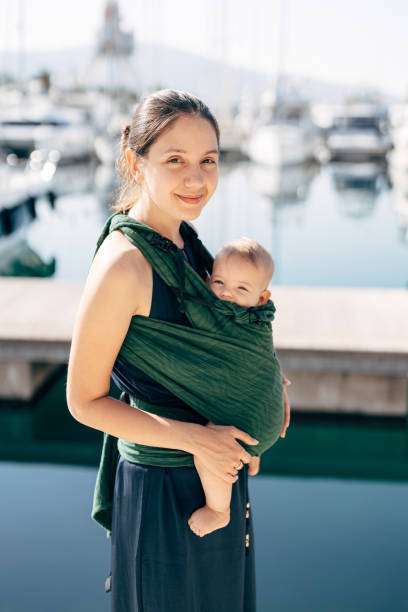
1. When you carry a baby carrier , the way strangers look at you will change instantly.
Many parents share a common experience: when they’re not with their children, whether in shopping malls, elevators, streets, or restaurants, people’s eyes rarely linger on them for long. However, once they’ve securely placed their baby in a baby carrier , the eyes of the entire world seem to turn to them. Especially when the baby’s head pops out from their chest, their breath gently touching their skin, they’re surprised to find that the previously indifferent, hurried, and distant rhythm of the city suddenly takes on a visible softness.
Behind these shifts in gaze lies a subtle set of interpersonal rules. First, caring glances appear more frequently, especially from older people, parents, or those who naturally project emotions onto infants. They’re not just looking at the baby; they’re trying to capture your expression as a caregiver to see if you’re tired, stressed, or enjoying the moment. Some even smile upon seeing a baby, as if the baby itself possesses the power to ease social distance.
Secondly, there’s the protective gaze, usually from those who are sensitive to their environment and have a sense of responsibility.
For example, when you’re waiting at a red light at an intersection, someone will naturally adjust their distance to give you more space; when you’re standing on a crowded bus, someone will offer you their seat; when you push open the door to a coffee shop, someone will hold the door for you. When you’re carrying a baby, you’ll feel for the first time so directly that the kindness of strangers isn’t accidental; it’s triggered by the fact that you’re carrying a more vulnerable life.
However, their eyes also subtly convey another layer of behavior: scrutiny. Some people will silently assess whether your baby carrier is safe, whether your baby’s head is properly supported, and whether you are skilled at using the carrier. Although they don’t say anything, their gaze can create a sense of pressure for a fleeting moment. This feeling of being silently scrutinized is one of the most profound experiences many new parents have in the early stages of using a baby carrier .
Therefore, when you walk in public spaces carrying your baby, you’ll instantly realize that people’s eyes no longer easily sweep over you, but are drawn to the little life in your arms. You’re not only more likely to attract attention, but you’re also more likely to understand others. This is the first powerful social revelation offered by baby carriers : eye contact is the world’s direct response to your parenting status.
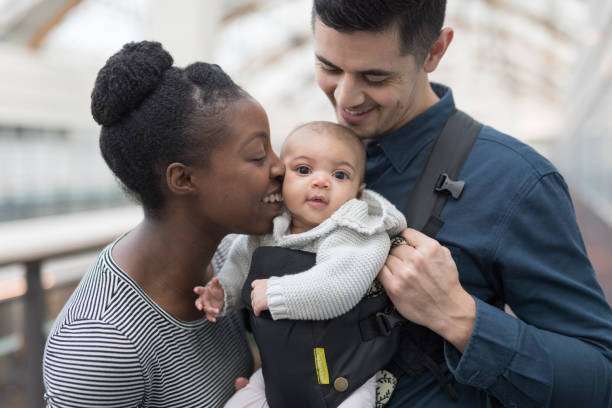
II. Baby carriers reveal unexpected physical avoidance, distance adjustment, and silent etiquette.
Many parents worry about crowds or physical contact when using a baby carrier for the first time. But once you actually carry your baby, you’ll discover another unexpected phenomenon: the body language of those around you will automatically adjust to your needs.
The most obvious sign is physical avoidance. When you’re walking down a hallway, staircase, or street, people instinctively make way for you. They’ll slightly sidestep, back away, or step aside to get around you, and this action usually happens very quickly, requiring almost no verbal communication. This automatic avoidance is a highly sensitive social response stemming from the universal awareness that babies need protection. It’s not because you’re particularly important, but because humans instinctively make way for people with babies.
Next is distance adjustment. When you’re not in a baby carrier, people tend to maintain a shorter social distance from you, especially in urban environments. But when your baby is against your chest, people automatically increase that distance. They don’t want to bump into the baby or put pressure on you. This behavior is especially noticeable in elevators, subways, or hallways. Previously, you might have kept a half-step distance from strangers, but now you might enjoy a step or two of buffer space. This increased safe distance makes you realize for the first time that people can establish boundaries and respect for each other silently.
In addition, you will observe a particularly subtle kind of “silent etiquette.” For example, when you are carrying a baby up or down stairs, people will quietly lower their footsteps; when you pass a group of people chatting, they will automatically pause for a second or two so as not to disturb the baby; when you are in line, the people behind you will deliberately avoid getting too close; and even in some narrow spaces, people will let you go first.
These seemingly minor actions are enough to illustrate a fact: what a baby carrier shows you is not just the politeness of one individual, but a protective structure in society that universally exists for vulnerable lives. You might even rebuild your trust in the goodwill of society because of these actions.
What’s even more interesting is that not everyone can observe these physical behaviors. Only when you truly hold your baby against your chest and feel their gentle sway with your steps will you, as if unlocking a new sensory ability, keenly perceive every subtle movement of others. This awakening is the second major social revelation that baby carriers bring to many parents: body language automatically upgrades into a gentler set of interaction rules when facing vulnerable lives.
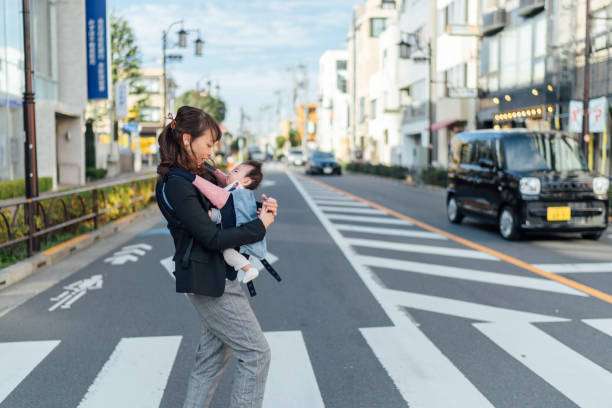
III. Baby carriers reveal implicit societal expectations: You’ll see more clearly who truly understands you and who are just bystanders.
Using a baby carrier not only allows you to observe the subtle movements of strangers, but also makes you aware of the different attitudes of familiar people when facing parenting issues. Some people will be more caring when you carry the baby, some will show impatience, and some will unsurprisingly show tenderness. These reactions often constitute key clues for you to re-evaluate your interpersonal relationships.
For example, when friends accompanying you see you carrying a baby, some will naturally slow down and walk with you along a safe route, some will offer to help you carry things, and some will notice the baby’s condition and remind you to adjust your posture. These actions show that they not only see the baby but also your needs as a parent; they understand the difficulties of parenting and are willing to help.
However, there’s another type of person. They might unconsciously quicken their pace, unaware that you need more buffer space. They might ignore the baby’s sleep status, speak loudly, or rush you to make decisions. Some might even think that baby carriers are only for the convenience of parents, ignoring the physical burden the parents are currently under.
This contrast allows you to truly see who understands the weight of parenting and clearly identify who lacks empathy. The existence of a baby carrier is like a mirror, revealing the deep dynamics of interpersonal relationships. You’ll find that those who understand you don’t need much explanation; those who don’t understand you, no matter how much you explain, will find it difficult to resonate.
Baby carriers also reveal societal expectations of gender roles. Many people automatically associate baby care with female identity, so when a father carries the baby, he often receives extra attention, praise, or unexpected surprise. While this reaction may seem positive, it reflects society’s continued view of childcare as the mother’s responsibility. These subtle reactions are often the first time many families truly become aware of underlying biases during the parenting process.
As you use baby carriers for an extended period , you’ll gradually learn to filter out certain voices and become more reliant on those who understand you. This is the third powerful social revelation that baby carriers offer: they not only reveal societal expectations but also help you redefine your relationships with others.
Conclusion
Baby carriers not only change your parenting style but also how you perceive society. They make you more sensitive to the kindness and scrutiny in others’ eyes, more easily recognize the distance and protection in body language, and more clearly understand the true attitudes of those around you towards parenting.
As you carry your baby through every corner of life, you’ll slowly come to understand that the world isn’t indifferent but rather supported by countless small acts of kindness. It’s just that before you became a caregiver, you never noticed the existence of these acts of kindness.
Baby carriers are not only parenting tools but also a unique social experience. When you slow down and carefully observe these micro-interpersonal behaviors, you will understand the connections between people and the emotions and goodwill that can be conveyed without words more deeply than ever before.