Baby carrier ‘s “superpowers”: 5 secrets to ensuring your baby’s safety in emergencies

A baby carrier is a modern parenting tool that not only provides convenience and comfort for parents and helps care for their baby’s daily life but also demonstrates remarkable “superpowers” in emergencies. As a baby grows, the carrier becomes a valuable assistant for parents, and its role is even more crucial in certain emergency situations. Many parents, when choosing a baby carrier, often focus on factors such as comfort, material, and style but overlook its potential in crisis situations.
This article will delve into the “superpowers” of carriers, explaining how they help parents ensure their baby’s safety in emergencies. Whether facing sudden accidents, unexpected environmental changes, or a baby’s physical needs, baby carriers provide parents with stable support and protection. Through this article, parents can gain a clearer understanding of the multiple functions of carriers, allowing them to use them with greater confidence to ensure their baby’s safety.
Part 1: How baby carriers provide “emergency response” support
1.1 Quick Response: carriers allow you to quickly pick up your baby.
In life, unexpected situations always arise, such as a baby suddenly falling or being startled. These moments require parents to have the ability to react quickly. Traditional ways of picking up a baby may require adjusting the position with your hands or finding a point of support, while a baby carrier offers great convenience. In an emergency, parents can quickly pick up the baby from the carrier, and the support provided by the carrier helps reduce the burden on the parents’ back and shoulders, thus enabling them to respond to emergencies more quickly.
For example, when a baby falls, parents can immediately pick them up with the help of a carrier and maintain their stability, preventing the baby from suffering additional injury due to the parents’ hasty movements. The design of the carrier , especially the reinforced shoulder straps and waist belt, ensures that the baby fits securely against the parents’ chest, allowing for smoother movements and preventing the baby from losing balance due to sudden actions.
1.2 Providing stable support: The safety design of the baby carrier
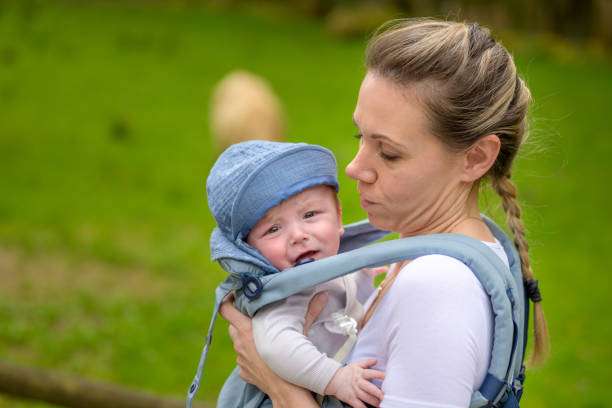
Safety is one of the most critical elements in carrier design. High-quality baby carriers are structurally designed to provide comprehensive support for the baby, especially in emergencies. The shoulder straps and waist belts are typically made of thickened materials to provide better support and prevent the baby from slipping or falling due to quick movements of the parents.
In addition, the lumbar support design of the carrier evenly distributes the baby’s weight, keeping parents comfortable during extended use. This design is crucial in emergencies, ensuring parents remain flexible while providing ample support and protection for the baby, preventing unnecessary physical stress or injury.
Part Two: Practical Applications in Emergency Situations
2.1 Preventing your baby from getting lost: Baby carriers give you peace of mind.
When parents take their babies out, especially to crowded places, the risk of the baby getting lost is a safety issue that no parent can ignore. Shopping malls, airports, and streets are often high-risk areas for babies to get lost. The traditional way of holding a baby in your arms, especially in crowded environments, is difficult to effectively protect the baby and may even increase the risk of the baby being jostled or bumped. This is where baby carriers play a vital role.
a baby carrier design is that it allows parents to keep their hands free while securely holding the baby to their chest. Even in crowded environments, a baby carrier ensures the baby won’t get separated from the crowd. Many carriers also feature anti-lost designs, such as a chest safety buckle or reinforced side straps, further ensuring the baby won’t slip out of the carrier, allowing parents to walk with peace of mind in any environment.
2.2 Immediate protection during emergencies: Safety design of the harness
In extreme emergencies, babies may encounter various unexpected situations, such as contact with dangerous objects or sudden falls. For parents, a baby carrier can provide very effective protection. When a baby falls, the shoulder straps and waist belt of the carrier can help stabilize the baby’s body, preventing injury from a lack of support.
For example, if a baby slips while being held by parents, the baby carrier ‘s design ensures the baby’s stability and prevents them from falling to the ground. At the same time, the carrier provides a sense of being enveloped, a feeling of security that is especially important when the baby is emotionally unstable.
Part Three: How to handle other emergencies using a baby carrier
3.1 Emergency Evacuation: The Emergency Functionality of the Baby Carrier
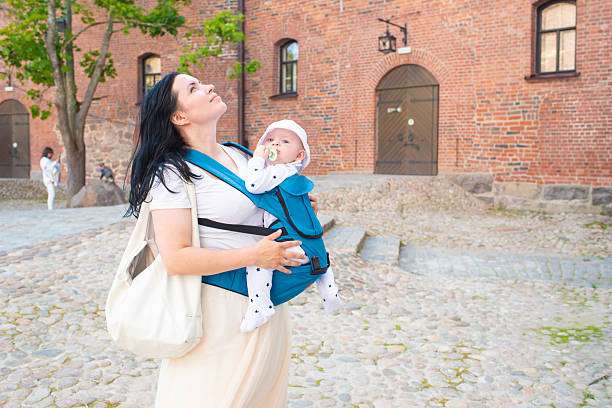
Emergency evacuation is a very special situation that usually involves quickly taking the baby with you. For example, in the event of a fire or natural disaster at home, parents must get their baby out of the danger zone as soon as possible. In such situations, the convenient design of a baby carrier provides great assistance to parents.
Parents can quickly and securely carry their baby on their backs using a baby carrier , freeing their hands to handle other emergencies. The carrier’s stability ensures the baby won’t be startled or injured during evacuation, allowing parents to focus more on the task at hand without worrying about stabilizing the baby.
3.2 Provides instant shielding: the protective function of the shoulder straps
In addition to basic support, some high-end baby carriers offer extra protection. For example, the shoulder straps or back of the carrier may be designed with sunshades to protect the baby from strong sunlight. For areas with rapidly changing weather, the carrier may also be equipped with a waterproof or warm cover to ensure the baby’s safety in inclement weather.
This additional feature is especially important during sudden weather changes, providing effective protection for babies, preventing prolonged exposure to adverse weather conditions, and reducing health risks.

Part Four: How to Choose the Right Baby Carrier for Emergencies
4.1 Choose a safety-certified shoulder strap
baby carrier brands on the market , but not all of them meet safety standards. Therefore, parents must pay special attention to safety certifications when choosing a baby carrier. Some baby carrier brands have passed international certifications in Europe and America, ensuring adequate protection in emergency situations.
4.2 The versatility of baby carriers: keeping your baby safe at all times.
When choosing a baby carrier, parents should pay special attention to its versatility. Many baby carriers on the market offer additional storage pockets, which is very convenient for parents. In daily life, these pockets can be used to store medications needed for a sudden illness in the baby, or emergency items such as tissues and wet wipes that might be needed when going out, preventing parents from panicking in emergencies.
Furthermore, some baby carriers incorporate adjustable shoulder straps and waist belts in their design, offering significant advantages. Babies are in a rapid growth phase, and their body dimensions constantly change. This adjustable design allows for flexible adjustments based on the baby’s actual development. This not only ensures safety during use, keeping the baby securely in the carrier, but also enhances comfort, providing a better experience for both the baby and the user.
4.3 Choose a suitable baby carrier based on your baby’s size
Babies’ bodies change size at different stages of growth, so choosing a baby carrier that can be adjusted is very important. The carrier should be adaptable and adjustable to different baby sizes to ensure it provides sufficient support and protection in emergencies.
Part 5: Maintenance and Usage Techniques for Baby Carriers
5.1 Regularly check the safety of the shoulder straps.
To ensure the baby carrier functions optimally in emergencies, parents should regularly check its safety. Inspect the shoulder straps, waist belt, buckles, and back support for security, and check for any damage or loosening that could affect its use.
5.2 Ensure correct wearing
Wearing a baby carrier correctly is fundamental to ensuring your baby’s safety. Parents need to ensure that all parts of the carrier are adjusted to fit the baby’s body shape, and that the shoulder straps and waist belt are adjusted comfortably without being loose, ensuring the carrier is secure.
Conclusion
Baby carriers are more than just parenting aids; they demonstrate remarkable capabilities in emergencies. From rapid response to ensuring a baby’s safety in every aspect, baby carriers play a vital role in parents’ lives. By choosing the right baby carrier , regularly checking its safety, and using and wearing it correctly, parents can handle unexpected events with greater confidence and protect their babies from harm.