7 Effective Stress Relief Tips for Baby Carrier : Key to Choosing the Right Model to Completely Avoid Back Pain

Many parents face a common problem when using a baby carrier : as the usage time increases, the back pain begins to worsen, sometimes even to the point that the pain makes it impossible to continue using the carrier.
It may seem like just a tool for carrying a baby, but when used improperly, poorly designed, or not adjusted correctly, it can become a burden that rapidly accumulates physical stress. In fact, back pain is not an inevitable result of using a baby carrier , but rather a chain reaction caused by choosing the wrong model, wearing it incorrectly, and ignoring body mechanics. Parents who can easily carry their babies for extended periods are not necessarily stronger, but rather they have mastered the key techniques of using a baby carrier and chosen a structure that truly distributes pressure.
Many people’s understanding of baby carrier stress relief is still limited to superficial concepts like “wide enough shoulder straps” and “thick enough waist belt,” but the true principles of stress relief are far more complex. When the human body bears weight, the shoulders, waist, hips, and core muscles all participate in the effort, and the design of the carrier directly affects whether these stress points are balanced.
If any part of this system is out of balance, the pressure will concentrate in a particular area, especially the shoulders, neck, and lumbar spine, causing pain. However, if the carrier is well-designed, the parents maintain the correct posture, and use appropriate adjustments, then even carrying the baby for extended periods can remain easy and comfortable.
Therefore, this article will break down seven of the most effective stress-reduction techniques. These principles will not only help you choose the right baby carrier for you, but also prevent back pain during daily use, while increasing stability and enjoyment when carrying your baby. By understanding and applying these techniques, most parents can say goodbye to aches and pains caused by baby carriers and make carrying their baby a relaxed and natural experience.

Choose a shoulder strap with a sturdy waist belt structure.
baby carrier that effectively reduces strain on the lower back must have a stable and supportive waistband structure. This is not only to distribute the baby’s weight over a wider area but also to help maintain balance during walking. Many carriers with waistbands that are too narrow or lack sufficient support force parents to rely solely on their upper body to bear the weight when carrying the baby, causing excessive pressure on the shoulders and lumbar spine, resulting in pain. Conversely, an ergonomically optimized wide waistband transfers weight to the pelvic area, making it easier for the body to support the baby.
A baby carrier’s stability depends not only on its width but also on its material, internal support layer, and fastening method. Some baby carriers , while seemingly large, are made of overly soft materials and fail to provide adequate support; others slip easily even when tightened, causing the baby’s weight to continuously compress the parent’s lower back. Well-designed baby carriers, however, stay firmly in place on the pelvis when tightened, preventing them from shifting even when the parent walks, bends over, or lifts objects.
This structure relieves the lumbar spine from bearing the full weight, effectively reducing pain. Therefore, when choosing a baby carrier , parents must prioritize the carrier’s design above all else, rather than solely focusing on color or appearance.
Make sure the shoulder straps are in the correct direction of force.
The direction of force applied to the shoulder straps is a crucial factor in determining the ease of use of a baby carrier. Many parents experience shoulder pressure or soreness when using a baby carrier because the shoulder strap angle is incorrect, causing pressure to concentrate on the side of the neck or the upper edge of the shoulders.
If the shoulder straps are too close to the neck, the weight will be concentrated in sensitive muscle areas, causing stiffness or even headaches; if the shoulder straps are too wide outwards, they may not be able to stabilize the baby’s weight, requiring the entire upper body to constantly exert effort to maintain balance during use.
A properly designed shoulder strap should extend naturally downwards, without compressing the neck or spreading excessively outwards. The padding inside the strap should be soft yet supportive, avoiding shoulder pain caused by thin material.
Furthermore, an adjustable strap length allows parents of different body types to find the optimal position, distributing weight more evenly across the shoulders and upper back. As long as the strap direction aligns with the body’s lines, pressure will not be concentrated in one point but will be evenly distributed, naturally reducing pain.
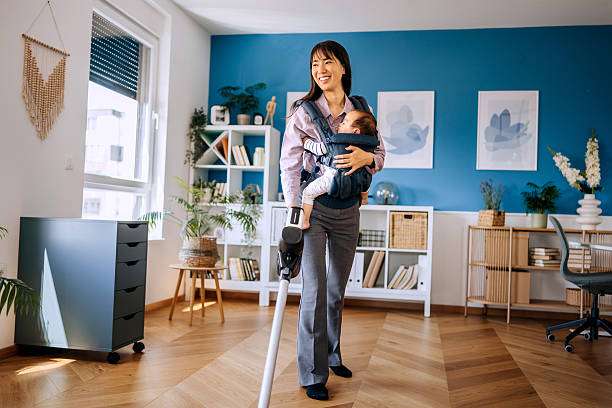
Make sure the baby’s center of gravity is close to the parents’ body.
The farther the baby is from the parents’ bodies, the more effort the parents need to maintain balance, which is significantly more tiring than carrying an object close to the body. Many parents feel increased strain on their backs when carrying their babies, not because the baby is too heavy, but because improper use of the baby carrier has the baby too far from the body, creating a huge leverage force that causes the body to constantly lean forward to compensate for the shift in the center of gravity.
proper baby carrier should keep the baby close to the parent’s chest or abdomen, just like when being held in an arm. Parents should be able to maintain a natural upright posture while walking, without constantly using their lower back to resist pressure due to a forward shift in their center of gravity. When the baby is close to the body, the weight is naturally transferred to the pelvis, shoulders, and the carrier structure, rather than being borne solely by the parent’s lumbar spine.
To achieve this, parents must ensure the belt is secure, the shoulder straps are adjusted properly, and there are no gaps when carrying the baby. This close fit not only makes things easier for parents but also makes the baby feel safe, thus reducing crying.
a baby carrier structure that fits your body shape
Every parent has a different body shape, and the fit of the baby carrier to different body types will affect the pressure relief effect. Some parents have broad shoulders and narrow waists, while others have narrow shoulders and thicker waists. If the carrier cannot be adjusted according to the body shape, certain areas will bear too much pressure.
For example, parents with narrow shoulders may experience neck compression when using narrow shoulder straps; if parents with different waist curves use an unsupported waist belt, the weight will not be evenly distributed.
A good baby carrier typically offers high adjustability, including shoulder strap length, waist belt range, carrier height, and even seat width. When trying out a baby carrier, parents must ensure it fits their unique body shape, rather than forcing themselves to fit. If the carrier doesn’t conform to the body, pressure will accumulate while carrying the baby. Conversely, a carrier that closely matches the parent’s body shape distributes pressure evenly, significantly improving stress relief. Parents should try out baby carriers or observe demonstrations of similar body types to ensure the carrier meets their needs.
Learn the detailed steps to properly adjust a baby carrier .
Many parents, despite purchasing high-quality baby carriers , still feel exhausted because they don’t know how to properly adjust the carrier ‘s various components. Every buckle, adjustment strap, and support surface of the carrier plays a role in reducing pressure; if any part is not adjusted correctly, the overall effect will be affected. Common problems include shoulder straps being adjusted too long, causing the baby to sag; waist belts being too loose, causing a shift in the center of gravity; and the back support of the carrier not being properly extended, causing the baby to bend.
Properly adjusting a baby carrier requires repeated practice from parents, constantly adjusting it based on their own physical condition and the baby’s size. For example, the shoulder straps should be fine-tuned after placing the baby on your back to ensure a snug but not constricting fit; the waist belt should be secured before carrying the baby; and the carrier height should be adjusted according to the baby’s head position. Adjusting the carrier is not a one-time action, but a process that requires observing the baby’s reactions, sensory feedback, and the relationship between the carrier and its structure. Once parents master the adjustment techniques, the carrier will become increasingly comfortable and easier to use, naturally reducing pain.

Maintain the stability of the parents’ own posture
Many baby carrier users overlook a crucial fact: body posture itself affects the baby carrier’s stress-relief effect. If parents frequently bend over, hunch their shoulders, shrug, or tilt their bodies while carrying their baby, the carrier structure cannot maintain its original weight balance, concentrating the weight on a particular area, such as the shoulders or lower back. Over time, these movements exacerbate physical fatigue and cause the carrier itself to lose its proper support.
The ideal posture is to be naturally upright, with the abdomen slightly tucked in, shoulders relaxed, and steps steady. This posture allows the baby carrier to distribute pressure most effectively, ensuring the baby’s weight is more evenly distributed throughout the body. Many parents initially need to consciously remind themselves to maintain the correct posture, but once they get used to it, they will clearly feel that carrying the baby is less strenuous, and they won’t have to worry about discomfort during long outings. A stable posture not only protects parents but also provides a more comfortable and supportive experience for the baby.
Actively adjust the baby carrier mode according to the baby’s developmental stage.
A baby’s weight, size, and mobility will change as they grow, and the way the baby carrier is used must also be adjusted accordingly. If parents continue to use a fixed baby carrier pattern without adjusting it according to the baby’s age and weight changes, it will lead to an unsuitable way of bearing pressure on the body, resulting in localized pressure concentration.
For example, newborns need stronger head and neck support; after six months, as babies gain weight, they need wider hip support; and older babies need their baby carrier height adjusted to accommodate their new center of gravity.
When a baby carrier’s structure doesn’t keep pace with the baby’s physical development, parents can unintentionally experience more stress because the carrier can’t distribute weight most effectively. Proactively adjusting the carrier’s design according to the baby’s growth stage is key to avoiding back pain from prolonged carrier use. When the baby carrier’s structure matches the baby’s body shape, weight distribution becomes natural and effective, making it easier for parents to hold their baby.