Baby carrier’s 8-week weight training results are amazing: core muscles are stronger than expected

Parenting is not only an emotionally demanding activity but also an invisible form of physical exercise. Many parents have unexpectedly found significant improvements in their physical fitness while caring for their babies, especially when using a baby carrier for daily carrying and movement. Through an 8-week systematic weight-bearing training experiment, parents experienced an unexpected increase in core muscle strength. This effect was not only reflected in abdominal and back strength but also significantly improved shoulder and neck stability and overall balance. The baby carrier has become not only a powerful assistant for parents in childcare but also a unique home fitness tool.
This article will discuss the specific methods of 8-week weight training with a baby carrier , changes in core muscle groups, precautions during the training process, and a scientific analysis of the training results. By combining experimental data, parents’ actual experiences, and scientific theories, it comprehensively reveals the potential value of baby carriers for physical training in daily childcare and provides practical reference for parents who intend to use baby carriers for physical exercise.
I. Principles and Methods of Baby Carrier Weight Training
baby carrier weight training is to use the baby’s weight as a natural load, distributing the load evenly across the shoulders, waist, and back through the carrier strap, encouraging parents to activate their core muscles during daily activities. Core muscles include the rectus abdominis, transverse abdominis, quadratus lumborum, erector spinae, and shoulder and back stabilizing muscles. These muscle groups are required to work together when carrying a baby, walking, and moving objects.
The training method is not complicated; the key is consistency and correct posture. First, choose a high-quality baby carrier with an ergonomic design and adjustable shoulder and waist straps to distribute the baby’s weight evenly. Second, parents should maintain correct standing and walking postures during daily activities, avoiding excessive forward leaning or shoulder tension. Daily walking, bending over to do housework, or gentle stretching under weight can activate core muscles and enhance stability. Through 8 weeks of continuous training, accumulating 30 to 60 minutes of weight-bearing activity daily, parents can significantly improve core strength and physical endurance without increasing additional exercise time.

II. Changes in Core Muscle Groups and Training Effects
After 8 weeks of systematic training, the parents’ core muscle groups showed changes in increased strength, endurance, and posture. Increased strength in the rectus abdominis muscles reduced fatigue in the lower back when carrying or moving the baby, decreasing lower back pressure and soreness. Strengthening of the transverse abdominis and quadratus lumborum muscles improved lumbar spine stability, allowing parents to maintain the natural curve of the spine when bending or turning, reducing the risk of potential sports injuries. Strengthening of the shoulder and back muscles improved neck and shoulder stability, reducing neck and shoulder tension and pain caused by carrying the baby or the weight of the baby.
Experimental data shows that after 8 weeks of training, participating parents experienced an average increase of 25% to 30% in core muscle strength, approximately 20% in lower back endurance, and a significant reduction in muscle fatigue during daily activities such as carrying their babies. Simultaneously, the training also improved overall balance, with parents showing significantly enhanced body control and coordination when walking quickly or climbing stairs. These findings demonstrate that baby carrier weight-bearing training is not only suitable for natural training within a childcare environment but also offers certain fitness benefits, making it an efficient method that balances childcare and physical fitness improvement.
III. Precautions during training
While baby carrier weight training is highly effective, several safety and scientific considerations must be taken into account during the process. First, the choice of baby carrier is crucial. It should be ergonomically designed with moderately wide and thick shoulder straps, a strong waist belt, and a robust back support structure to ensure the baby’s safety and the parents’ comfort. Second, posture control is essential. Parents should maintain an upright posture, relaxed shoulders, and even gait, avoiding excessive forward leaning or twisting to prevent injuries to the lumbar spine and shoulders.
In addition, training intensity should be increased gradually. Initially, the baby carrier can be used for 15 to 20 minutes daily, gradually increasing to 30 to 60 minutes as the core muscles adapt, avoiding excessive muscle fatigue caused by prolonged weight-bearing time. The baby’s safety and comfort are also crucial considerations during training. Parents should ensure the carrier is securely fastened, the baby is in the correct position, and regularly check the buckles and shoulder straps to prevent slippage or loosening. A scientifically planned training schedule and safety awareness are fundamental to achieving effective weight-bearing training and maintaining child safety.

IV. Scientific Analysis of Training Results
baby carrier weight training can significantly improve core muscle strength in a short period of time lies in its combination of natural weight-bearing and everyday activities. Unlike traditional gym equipment training, baby carrier weight training utilizes daily walking, housework, and the act of carrying a baby to achieve coordinated full-body exertion. This functional training can more comprehensively activate the core muscles while enhancing body coordination and balance. Scientific research shows that functional weight training is often more effective than single-area training in activating core muscles and improving muscle endurance, and the baby carrier provides this natural weight-bearing condition, allowing for efficient training without the need for additional gym time.
Furthermore, the psychological benefits of baby carrier training cannot be ignored. Parents experience a sense of accomplishment and psychological satisfaction while completing their daily childcare tasks and simultaneously achieving physical exercise and strength gains. This positive feedback further enhances the sustainability of the training, enabling parents to maintain a stable habit throughout the 8-week training cycle. Compared to traditional fitness training, baby carrier weight training is more closely related to daily life, easier to integrate into routines, and reduces exercise adherence issues, thus ensuring the stability and long-term sustainability of training results.
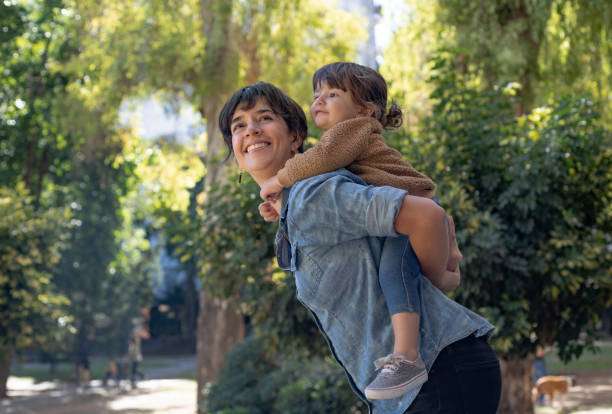
V. The impact of core muscle strengthening on daily childcare
Strengthening core muscles not only improves parents’ physical fitness but also directly enhances their daily parenting experience. Increased abdominal and back strength reduces fatigue during prolonged periods of holding, soothing, or moving infants, decreasing lower back pain and neck and shoulder strain. Strengthened shoulder and back muscles improve stability when carrying and moving infants, reducing the risk of accidental slips and injuries from improper posture. Improved overall balance provides better body control when going up and down stairs, pushing strollers, or outdoors, reducing the risk of falls and collisions.
Meanwhile, strengthening the core muscles also has a positive impact on parents’ daily physical posture and endurance. Long-term baby carrier weight training can improve the waist and abdominal curves and enhance muscle tone, enabling parents to maintain good posture and physique during childcare, thereby reducing muscle strain caused by poor posture. The value of this functional training is not only reflected in the improvement of physical strength, but also in its significant effects on convenience of life, health protection, and childcare efficiency.
Conclusion
Through a practical analysis of 8 weeks of weight-bearing training with a baby carrier , it is clear that the baby carrier is not only a childcare tool but also a highly effective functional training method. The improvement in core muscle strength, back endurance, balance, and daily childcare efficiency fully demonstrates the dual value of baby carrier training. By using baby carriers scientifically for weight-bearing training during childcare, parents can not only maintain their health but also achieve a win-win situation of improved physical fitness and childcare efficiency without increasing exercise time.
baby carrier weight training offers modern parents a new perspective on parenting. Parenting is not just about investing emotions and time; it can also be an opportunity to improve physical fitness and health. Through proper training, scientific operation, and safety awareness, parents can organically combine parenting with physical training in daily life, achieving a comprehensive improvement in physical health, parenting efficiency, and the quality of parent-child interaction. Baby carriers not only support the child’s growth but also support the parents’ remarkable improvement in physical fitness, strengthening core muscles beyond expectations, truly becoming a dual tool for family parenting and healthy living.