
In many families, baby carriers were initially chosen to make childcare easier—freeing hands, facilitating travel, and providing greater security for children.
But as more families began using them, this flexible strap quietly transformed the dynamics of intimacy and care within the family. It freed the question of “who cares for the child” from a fixed answer, and made intimacy no longer confined to a single individual.
1. From “mothers carrying their babies alone” to “family participation”
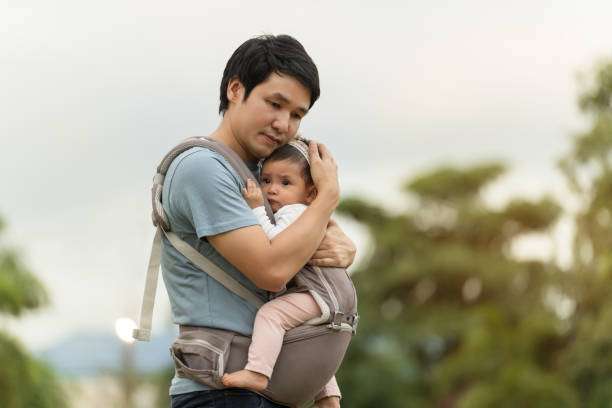
In traditional childcare settings, carrying a child on one’s back is often seen as a natural act for mothers.
The baby carrier was once a symbol of maternal love and a cultural memory—a fusion of warmth, breath, and heartbeat.
Today, baby slings are appearing on more people’s shoulders. Fathers carry their children to the park, grandparents use them to coax their grandchildren to sleep, and older siblings learn how to adjust the buckle.
Baby slings have transformed caregiving from a personal responsibility into a shared family experience.
Psychologist Winnicott proposed the concept of a “good enough caregiver”: children need stable, secure attachment, not a single role. When a baby carrier allows more people to be close to a child, this “sense of security” of being cared for by multiple people naturally develops.
2. The sling allows for shared intimacy
of the baby carrier is that it frees intimacy from monopoly. Children cling to different embraces, feeling the different scents and rhythms, and in the process, they develop multi-layered attachments. For families, this rebalances relationships.
Fathers learn to comfort, respond, and listen through the carrier; mothers learn to let go, making care a shared experience.
Caregiving is no longer the responsibility of a single person, but a shared emotional connection.
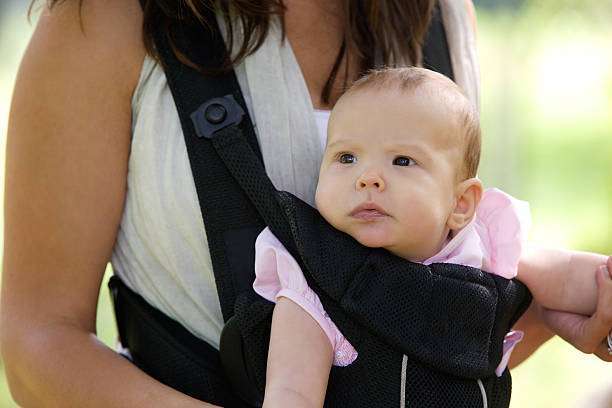
This “shared intimacy” not only reduces the pressure of care, but also provides a new foundation for understanding and trust between families.
3. Flexible Family Order
In modern families, baby carriers bring more than just functional convenience; they also create a softer family order, blurring the boundaries of traditional division of labor and allowing everyone to participate in care.
This change isn’t drastic, but rather gentle, subtle, and ongoing.
When fathers carry their children, mothers can breathe, and families become more resilient—caregiving is no longer a “help,” but a tacit understanding of “doing it together.”
4. From Tool to Symbol: The Emotional Significance of Suspenders
Today, baby carriers have transcended their role as mere baby-caring devices.
They have become a symbol of affection—a symbol of shared parenting among family members, and a more equal and intimate caregiving relationship. As care moves from individual to shared, the very fabric of family connection is redefined.
Baby carriers connect not just the physical distance between child and caregiver, but also the emotional connection that brings a family closer together.
Conclusion
A baby carrier restructures family intimacy. It allows caregiving to become freer, more balanced, and family intimacy to become more resilient. In this new order, caregiving is no longer a burden, but a shared intimacy; love no longer comes from one person, but is tenderly shared by all.