
Music is an important tool for babies to perceive the world, and baby carrier not only allow babies to safely stay close to their parents’ bodies but also provide an excellent opportunity for parent-child interaction. When music is combined with holding a baby in a baby carrier, this intimate experience can subtly cultivate a baby’s sense of rhythm while promoting physical coordination and emotional development. In this article, we will provide parents with a concrete and actionable guide to music interaction, from the unique advantages of baby carriers and the scientific principles of music interaction to practical methods and precautions.
Unique advantages of baby carriers
Baby carrier allow babies to maintain a safe and comfortable position while being close to their parents’ heartbeats and breathing. This intimate contact lays a natural foundation for developing a sense of rhythm.
Compared to traditional baby holding, baby carrier free parents’ hands, allowing for more natural musical interaction and body movement. In daily life, when parents walk around, gently pat, or rock their baby, the baby can perceive these subtle body rhythms through touch and vestibular sensation, forming an initial understanding of rhythm. This passive physical participation is the first step in developing a baby’s sense of rhythm and a crucial step in cultivating musical perception.
The scientific principles of music interaction
In the first few months after birth, infants are extremely sensitive to sound. Regular rhythms, repetitive melodies, and different pitches all stimulate the development of a baby’s auditory nerves. Musical interaction is not just about listening to music but also an experience of synchronizing physical movement with music, allowing babies to understand the patterns of time and rhythm. In a baby carrier, parents’ body movements help babies gradually perceive the loudness, tempo, and pauses in music. This rhythm training involves the coordinated development of the vestibular, auditory, and motor systems and has a positive effect on the development of language, motor skills, and social abilities.

Practical methods of music interaction
In practice, parents can incorporate music into their daily routine of carrying their baby in a baby carrier in various ways. First, there’s body movement. Choose a song with a clear rhythm and a short melody. Parents can gently pat the baby’s back or shoulders while swaying slowly back and forth to the music, walking in sync with the rhythm. Through this method, the baby gradually develops a sense of rhythm through combined tactile, visual, and auditory stimulation. As familiarity increases, parents can add hand gestures, such as gently clapping or imitating the beats in the music. The baby will try to observe, imitate, and even participate slightly, thus reinforcing rhythm recognition.
Secondly, there’s auditory interaction. Parents can add breathing or soft humming between songs, allowing the baby to notice changes in volume and rhythm. This interactive method enhances the baby’s auditory discrimination ability and helps parents form a closer connection with their baby.
As the baby gradually becomes familiar with musical rhythms, parents can integrate musical interaction into daily life, such as rocking the baby to the beat when waking up in the morning, playing soothing melodies and gently patting their back during afternoon rest, or synchronizing their steps with music while going for a walk. In this natural rhythmic environment, the baby will perceive rhythm in a stress-free state, and their body will grow in sync with the music.
Precautions
When engaging in musical interaction, it’s crucial to prioritize your baby’s safety and comfort. First, choosing an ergonomically designed baby carrier is essential to ensure proper support for your baby’s spine and hip joints. The music volume should also be moderate to avoid overly stimulating your baby’s ears.
The tempo and range of motion need to be adjusted based on your baby’s response; movements that are too fast or too large may cause tension or discomfort. Musical interaction doesn’t need to be forced; each session should only last a few minutes, allowing your baby to gradually become accustomed to it naturally. Initially, focus on passive rhythmic movements. As your baby becomes familiar with the rhythm, gradually guide them to actively participate in actions such as clapping and stomping, making the interaction more fun and meaningful.
Potential benefits of music interaction
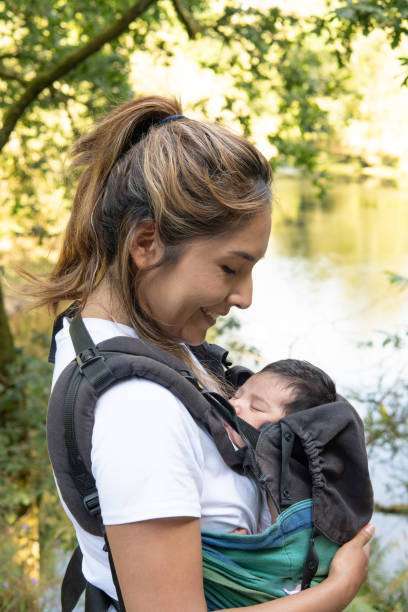
Through interaction with music via a baby carrier, babies not only develop a sense of rhythm but also benefit in terms of physical coordination, cognitive abilities, and emotional regulation. Regular body movement helps coordinate the development of limbs and core muscles, while musical rhythm stimulates attention and pitch recognition. Physical contact and eye contact between parents and children strengthen the emotional bond, making babies feel safe and warm. The rhythm and movement in music also help babies build emotional regulation skills, allowing them to grow up in happiness and comfort.
Summarize
A baby carrier is not only a safe and comfortable tool for holding your baby but also a natural platform for musical interaction. By appropriately using music and rhythm, parents can cultivate their baby’s sense of rhythm in daily life while also enhancing physical coordination and parent-child bonding. The core of musical interaction lies not in the complexity of techniques but in allowing babies to naturally perceive the rhythm and joy of music in a safe and intimate environment. Through gentle rocking, clapping, or humming, babies grow through the resonance of body and sound, gaining not only a sense of rhythm but also the most precious connection between parent and child.