7 key factors that profoundly impact baby’s sleep: Can baby carrier really improve baby’s sleep?

In modern parenting, parents often expend a great deal of energy trying to get their babies to sleep. Many new parents frequently find that their babies struggle to fall asleep in their cribs, but become instantly calm when held; they cry when put down, and fall asleep as soon as they’re held, seemingly trapped in a perpetual cycle.
As a result, baby carriers have gradually become an essential item for many families. They not only free up parents’ hands but also, to some extent, help babies settle into a more stable state. However, do baby carriers truly improve a baby’s sleep quality? Do all baby carriers achieve the same effect? Why do some babies sleep so soundly in a baby carrier, while others never seem to adapt?
To answer these questions, we must deeply understand the relationship between the baby carrier’s structure, fit, support point distribution, and the baby’s physiological needs. A baby’s sleep is not a simple behavior, but is closely related to their sense of security, breathing rhythm, swaddling, temperature control, muscle relaxation, and the rhythm of the parents’ bodies.
a baby carrier are far more numerous than what is apparent on the surface. It’s not simply a matter of “sleeping while snuggled up to an adult,” but rather the result of a complete physical and physiological system working together. The following analysis will delve into seven core factors that determine whether a baby can fall asleep soundly in a carrier, allowing parents to truly understand the impact of baby carriers on sleep and learn how to use them to create the best sleep environment for their baby.
1. Establishing a safe boundary through a close fit and a sense of protection
In the first few months after birth, infants rely on a sense of secure boundaries to maintain emotional stability. The womb provides a constantly swaddled, warm, and supportive environment. Once the baby is born, this protection suddenly disappears, and without alternative swaddling support, the baby can easily become restless and have difficulty falling asleep. The baby carrier plays a crucial role at this time. A good baby carrier creates a soft yet stable swaddle environment around the baby’s body, preventing the baby’s limbs from moving around freely and providing gentle support to the chest and abdomen. This environment allows the baby to quickly associate with the security of the womb, making it easier for them to fall asleep.
If a baby carrier doesn’t provide enough swaddling, such as using a material that’s too stiff, having a too-straight backrest, or fabric that doesn’t conform to the baby’s body curves, the baby’s body will be suspended in the air, with nowhere to place their limbs, causing discomfort. Conversely, swaddling too tightly can affect the baby’s breathing rhythm, making them feel constricted. The essence of a baby carrier’s swaddling design is to provide a sufficiently continuous, mild pressure sensation without interfering with breathing, and this pressure is precisely the key mechanism that helps babies calm down and fall asleep. Therefore, a snug, swaddling fit is not only a matter of comfort but also an important condition for establishing a safe boundary.

II. The influence of spinal and head/neck support on sleep depth
A baby’s spinal posture and head and neck stability in a baby carrier directly determine the depth of their sleep. A newborn’s spine has a natural C-curve. If a baby carrier excessively straightens or bends the baby’s spine, it will affect relaxation. In an unnatural posture, the baby’s body needs to constantly adjust muscle exertion to maintain balance, making it difficult for them to truly enter deep sleep. Conversely, a well-supported baby carrier allows the baby’s spine to curve naturally, with the back evenly supported from top to bottom, preventing the body from swaying from side to side or becoming deformed due to gravity. Stable body allows muscles to relax, making it easier to enter deep sleep.
The importance of head and neck support cannot be overlooked. Babies lack neck strength when asleep; if their heads tilt forward, it can compress their airways and cause them to wake up frequently due to discomfort. If their heads tilt back excessively, it can keep the neck muscles tense, resulting in shallow sleep. A high-quality baby carrier uses a curved back or flexible headrest to keep the baby’s head, neck, and torso aligned, automatically conforming to the baby’s position while they sleep, thus providing natural and stable support. A well-designed head and neck support system allows babies to sleep undisturbed for hours in the carrier.
3. Stabilize your baby’s breathing rhythm to help them fall asleep quickly.
A stable breathing rhythm is fundamental to sleep; the more even the breathing rhythm, the easier it is for the baby to enter a peaceful sleep. A baby carrier , by being close to the parents’ chest and abdomen, allows the baby to naturally feel the parents’ breathing and heartbeat rhythm, which has a natural soothing effect.
Research has found that infants can adjust their breathing patterns based on their parents’ breathing rates—a phenomenon known as co-regulation. This mechanism can quickly reduce a baby’s stress levels, making them easier to calm down. Especially at night or in outdoor environments, babies are prone to anxiety when faced with unfamiliar sounds or changes in light; the closeness of a baby carrier and synchronized breathing rhythms provide them with added stability.
Breathing rhythm depends not only on the parents but also on the pressure distribution of the baby carrier on the baby’s chest and abdomen. Uneven chest and abdominal support in a baby carrier can affect air intake, leading to shallow breathing and frequent startling. A properly supported baby carrier , on the other hand, allows the chest cavity to maintain natural expansion space, facilitating smooth breathing.
Especially before babies enter deep sleep, there are often several phases of rapid breathing or brief pauses. If the baby carrier structure is too rigid or does not fit properly, it can cause discomfort during this crucial phase. A proper design allows the baby to maintain a stable posture during these breathing changes, smoothly entering deep sleep.
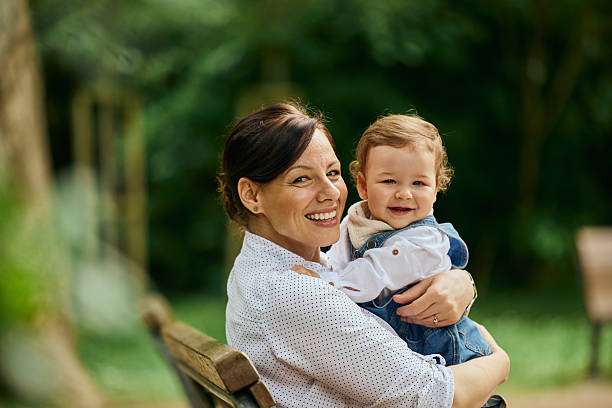
IV. Shifting body weight reduces muscle fatigue.
Many parents overlook the fact that what babies fear most when they want to sleep isn’t noise or light, but rather the inability to fully relax. When awake, infants constantly adjust their body position to adapt to gravity. In a baby carrier , if the body isn’t evenly supported, some areas will bear excessive pressure, such as the hips or back. This can cause muscle fatigue, leading to light sleep or frequent struggling. A well-designed baby carrier distributes the baby’s weight across the entire support structure, placing the baby in a near-weightless state, letting them know they are safely supported.
This feeling of weightlessness isn’t true weightlessness, but rather a more even distribution of pressure, so the baby’s muscles don’t need to exert force to maintain balance, nor do they need to repeatedly adjust due to postural instability. Once the baby’s body is completely relaxed, their sleep depth naturally increases. Newborns, in particular, have a very weak ability to adapt to gravity, so the baby carrier helps them overcome the pressure of gravity through this distributed support mechanism.
V. Temperature and physical comfort determine sleep duration
Temperature is a crucial factor affecting a baby’s sleep. If the baby carrier is too hot, the baby will keep waking up due to sweating, stuffiness, thirst, or skin discomfort; if the carrier is too cold, the baby will cry due to the temperature difference. A baby carrier allows the baby to be close to the parents’ bodies, and this intimate temperature helps the baby fall asleep more steadily, but this temperature will not have a negative effect only if the carrier material is breathable and dissipates heat well.
the baby carrier material is too thick, heat will accumulate on the back and inner thighs; if the ventilation holes are too large, cold air will enter directly, which can easily affect sleep, especially when used outdoors. The secret to a high-quality baby carrier lies in its material that combines breathability and warmth, creating a temperature buffer zone through a multi-layered structure, allowing the baby to feel the warmth of their parents without feeling stuffy. This meticulous design can significantly increase the baby’s sleep duration, allowing them to not only fall asleep in the baby carrier but also sleep longer and more soundly.
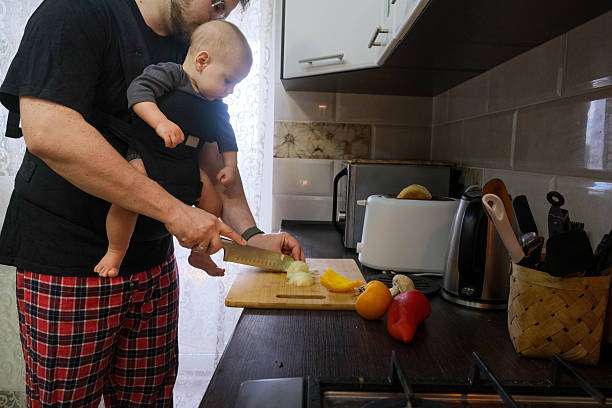
VI. Parents’ walking rhythm affects the degree of relaxation in a baby’s brain.
a baby can fall asleep smoothly in a baby carrier is greatly influenced by the parents’ walking rhythm. An infant’s vestibular system is extremely sensitive to even slight swaying of the body. This swaying mimics the fluid-induced stimulation a baby experiences in the womb, helping to stabilize the nervous system, reduce muscle tension, and trigger sleep mechanisms. If parents maintain a steady, consistent pace while using the baby carrier , the baby is more likely to relax due to this rhythmic stimulation. Conversely, excessively fast, hurried, or fluctuating pace will keep the baby’s vestibular system in a state of continuous stimulation, making it harder for them to fall asleep.
A well-designed baby carrier keeps the baby close to the parents’ center of gravity, allowing each step to be smoothly transmitted to the baby’s body, creating a gentle, rhythmic sway. This swaying is not a vigorous movement, but a gentle body resonance, similar to the rhythm of a parent gently patting their back or swaying softly. If the carrier is loosely constructed or does not fit snugly enough, the baby may wobble or swing excessively while walking, which can make them more excited or restless. Therefore, the way the carrier transmits walking rhythm is also an important factor in determining the quality of a baby’s sleep.
7. Emotional resonance helps babies fall asleep faster.
Babies are highly dependent on their parents’ emotions. When parents hold their babies in a baby carrier, their emotions are transmitted to the baby through posture, breathing, body temperature, and muscle tension. If parents feel strained, in pain, or anxious in the carrier, the baby will clearly perceive these signals of tension, making it difficult for them to enter a deep sleep.
Therefore, a baby carrier affects not only the baby but also the parents’ experience. A baby carrier that fits the parents’ bodies, provides reasonable weight support, and is easy to use allows parents to breathe naturally, adopt a more relaxed shoulder and back posture, and walk more steadily. All of these factors immediately influence the baby’s emotions through physical contact, making them feel more at ease.
The emotional resonance effect is not only reflected in how relaxed parents can soothe their babies, but also in the emotional connection formed through close physical contact between parents and babies. Studies show that babies who are close to their parents’ chests experience a faster stabilization of their heart rate, shorter crying periods, and easier hormonal balance. The baby carrier reinforces this emotional resonance through continuous physical contact, ultimately translating into stable sleep.