6 Deadly Baby Carrier Poses: These Issues Must Be Avoided for Safe Baby Holding

Among numerous childcare products, baby carrier have become a staple in many families due to their advantages, such as freeing up hands, enhancing intimacy, and convenience for outings. However, the convenience of baby carriers often masks a crucial fact: incorrect positioning can not only affect a baby’s comfort but also pose serious safety hazards. New parents, in particular, often assume that as long as their baby is placed in a baby carrier , they are “safe,” neglecting critical details such as whether the posture is correct, the angle is appropriate, spinal support is sufficient, and the airway is unobstructed.
An infant’s bones are not fully developed, their hip joints are delicate, their cervical spine is unstable, and their muscle support system is weak. Combined with their shallow breathing, improper baby carrier positioning can easily lead to serious consequences such as hip dysplasia, increased risk of suffocation, spinal compression, and obstructed blood circulation in the feet. These so-called fatal posture mistakes are not alarmist; they are real-life safety hazards that parents often overlook, yet they are the most important to be aware of.
The following will delve into six of the most common and potentially harmful baby-carrying posture mistakes, providing a complete breakdown of the mechanisms, visual recognition methods, and underlying physiological effects of each risk, and offering scientific improvement methods so that every parent using a baby carrier can truly hold their baby safely and support them healthily.
Baby’s neck hanging in the air causes airway compression
The most common and dangerous misconception is that the baby’s neck is not adequately supported. Before a baby’s head is stable, the cervical spine is very fragile, and the weight of the head is proportional to the body. If the baby carrier is used incorrectly, causing the baby’s head to droop forward and the chin to be close to the chest, it will compress the airway, preventing airflow.
This posture, which may seem like simply “lying down” or “curling up,” can be extremely dangerous for newborns and young babies because their airways are very delicate. If the angle of the bend is too small, it can cause poor ventilation within minutes. Parents often mistakenly believe that their baby is asleep when they are quiet, but it may actually be because their breathing is obstructed and they are unable to make any sound.
The correct posture should keep the baby’s chin at least one finger’s width away from their chest, with their head slightly tilted back rather than drooping forward, and their neck supported stably by the baby carrier or the parents’ chest. If the baby keeps falling forward, it means the carrier is not adjusted for a proper fit and must be readjusted immediately.

Vertically dropping the legs affects hip joint development.
The second fatal mistake is letting the baby’s legs hang vertically under the carrier, also known as the “hanging-crotch hold.” This position puts all of the baby’s weight on their hips or groin, passively stretching the hip joint, which can easily lead to hip dysplasia or even dislocation.
A baby’s hip joint is not yet fully formed and needs to be in a natural “M-shaped” position, with the knees higher than the buttocks and the thighs abducted and evenly supported. A slouching position not only provides insufficient support but also leaves the thighs without any point of leverage, concentrating pressure on a single point in the hip joint, which poses a significant risk with prolonged use. Many seemingly “comfortable” positions are actually due to the baby’s lack of strength to resist and are not signs of safety.
A well-designed baby carrier provides full knee-to-knee support, allowing the baby to sit comfortably in a small chair rather than being suspended. Parents using a baby carrier should also actively observe whether the baby’s thighs are stably supported; if the thighs droop straight down, the baby carrier model must be adjusted or replaced.
Covering a baby’s face poses a breathing risk
a baby carrier outdoors , habitually cover their baby’s head with a jacket, scarf, sunshade, or even the hood that comes with the carrier, thinking it will protect them from the wind, sun, and cold. However, doing so can easily obstruct breathing. Whether it’s fabric, clothing, or the edge of the carrier, anything close to the baby’s nose and mouth can lead to insufficient oxygen.
Infants have poor respiratory rhythm stability and cannot actively remove obstructions. If their faces are buried too deeply in the baby carrier near their chest, there is a risk of suffocation. In addition, if the clothing worn by the parents is not breathable, it can also create a localized oxygen-deficient environment.
The correct way is to keep the baby’s face fully visible and check their nose and mouth frequently to ensure they are clear. When using a baby carrier , you should be able to see the baby’s nose at all times; this is a fundamental principle for ensuring breathing safety. Parents should especially check frequently for any risk of the carrier pressing on the baby’s face when they are asleep.
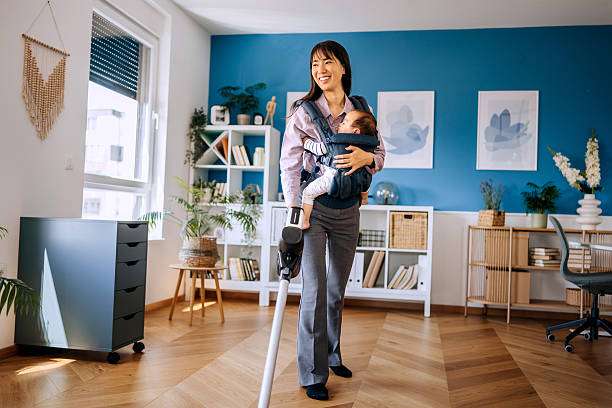
Incorrectly positioned waist belt can cause spinal compression in babies.
The baby carrier ‘s waistband bears the main weight for the mother or father and also maintains the baby’s body angle. Therefore, if the waistband is placed too high or too low, it may cause the baby’s spine to be in an incorrect position. Too low will cause the baby’s body to collapse inward, forming a “C” shape; too high will make the baby’s center of gravity unstable and prone to falling forward.
A baby’s spine needs natural curvature and support; it should not be forced to collapse or straighten. Incorrect belt placement can cause the baby’s back to be unsupported and unevenly supported, and it can also concentrate the pressure on a small area, potentially causing back discomfort and increased chest pressure in the baby.
The ideal position is for the baby’s back to rest against the parent’s chest and abdomen, with the spine forming a natural curve without being compressed. The belt should fit securely against the adult’s waist, positioning the baby slightly below the adult’s chest, providing stable support without putting strain on the spine.
The forward-leaning carrying position causes the baby’s head to frequently bump against the parents’ bodies.
their baby carrier to a forward-leaning position so that their babies face outwards . However, if the baby carrier is not designed for an “outward-facing hold,” forcing the baby to lean forward will cause their head to repeatedly hit the parent’s sternum or clothing fasteners due to the shaking. This is a continuous impact on the still-developing cervical spine; sometimes the frequency is small, but the number of times is high, which can actually harm the baby.
Furthermore, leaning forward shifts the baby’s center of gravity completely forward, compressing the abdomen and reducing leg support, while increasing the burden on the hip joints. Many babies appear excited in this position due to increased visual stimulation, but in the long run, it can easily lead to physical fatigue and increased pressure on the supporting structures.
The correct approach is to follow the baby carrier’s design. If the baby carrier is designed for outward carrying, ensure that its seat support, thigh angle, and neck protection all meet standards. If the carrier is designed only for use facing the parents, never force the baby to lean forward. Any posture must prioritize the baby’s physical development, not visual appeal.

A fit that is too loose or too tight can be dangerous.
The tightness of the baby carrier is a crucial safety factor that is often overlooked. If it’s too loose, the baby will wobble, lose their balance, and may even slip out of the carrier’s side wings; if it’s too tight, it will compress the chest, abdomen, and limbs, affecting the baby’s breathing and blood circulation. Many parents believe that “looser is more comfortable” or “tighter is safer,” but both can pose potential risks.
The fit should allow parents to easily kiss their baby’s forehead while ensuring there are no noticeable gaps between the baby’s body and the parents’ chest and abdomen. Two fingers should be able to fit comfortably under the thighs; the waistband and shoulder straps should be secure but not constricting. A proper fit keeps the baby stable, comfortable, and safe, while also allowing parents to move around without feeling burdened.
The correct fit needs to be adjusted as the baby grows; it cannot be kept at the same setting indefinitely. The tightness range in the product instructions is only a reference; parents must make minor adjustments based on the actual situation.
Conclusion
Safely using a baby carrier isn’t complicated, but it requires considerable care and vigilance. Every seemingly insignificant postural mistake can cause long-term or even irreversible harm to the baby. From the spine and hip joints to the airway, every small detail is closely related to the baby’s developing body structure.
Using a baby carrier remains the same: ensure the baby’s breathing is unobstructed, the spine is well supported, the hips are in a natural abduction position, and the body is securely attached. As long as parents avoid these common but potentially fatal postural mistakes, the baby carrier can truly become a safe, comfortable, and supportive parenting tool.