6 painful moments in a baby’s development: The real training experience is addictive

Parenting is not only an expression of emotion and responsibility, but also a test of physical endurance and psychological resilience. Many parents experience moments of pain, invisible to the naked eye but deeply felt, when using a baby carrier for daily childcare. This pain is not a negative experience, but rather a natural growth response as the body adapts to the weight, strengthens core muscles, adjusts posture, and improves endurance. Through real-world training experiences, parents can not only adapt to the weight of the carrier more quickly, but also experience unexpected physical and psychological improvements, thus developing a sustained interest in and even an addiction to baby carrier training.
This article will conduct an in-depth analysis of six common painful moments in the use of baby carriers , combining practical experience and scientific principles to comprehensively reveal the true value of baby carrier training, from physical sensations and psychological changes to training methods. It will also provide guidance for parents on how to cope with and optimize the experience in daily use, helping them find a balance between pain and growth, and achieve the dual benefits of efficient parenting and physical exercise.
1. Neck and shoulder stiffness: The first step in adapting to weight-bearing conditions
When parents first start using a baby carrier , the most noticeable sensation is often soreness and stiffness in their shoulders and neck. The shoulder and neck muscles need to maintain stability and balance while bearing the baby’s weight in daily life, which is a completely new challenge for parents who haven’t done weight training in a long time. This soreness is a sign of muscle activation, indicating that the shoulder muscles are adapting to the new load, adjusting their strength and improving their endurance.
The key to managing neck and shoulder pain lies in the scientific use of a baby carrier and posture adjustment. A baby carrier with moderately wide and thick shoulder straps, designed to distribute weight effectively reduces localized pressure. Simultaneously, by relaxing the shoulders, allowing the spine to naturally extend, and maintaining a steady pace, it alleviates the degree of pain. In the initial stages, parents can control the usage time, performing short-duration weight-bearing training multiple times a day, allowing the neck and shoulder muscles to gradually adapt to the baby’s weight, thereby reducing pain and enhancing training effectiveness.
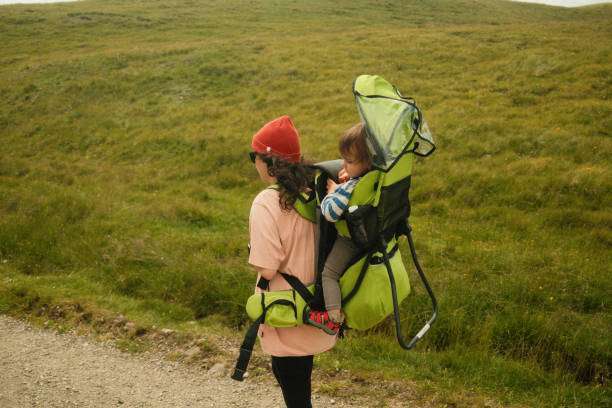
II. Tightened waist and abdomen: A signal of awakened core strength.
The tightness in the lower back and abdomen is one of the most representative painful experiences during baby carrier training. When supporting the baby’s weight, the core muscles need to continuously contract and stabilize the lumbar spine, and this sustained load causes an unprecedented tightness in the abdomen and lower back. Initially, this tightness often causes slight discomfort for parents, but as the core muscles gradually adapt, lower back and abdominal strength significantly improve, support capacity increases, and the pain gradually transforms into a feeling of strength and stability.
To optimize the effectiveness of core training, parents should maintain an upright back and slightly tuck in their abdomen when carrying an infant, avoiding excessive forward leaning or twisting of the body. Incorporating daily chores, short walks, and light stretching exercises can maximize core muscle activation, allowing the feeling of tightness in the lower back and abdomen to become a sign of strength growth rather than simply discomfort. After several weeks of training, parents will find that the tightness in their lower back and abdomen gradually decreases, while core strength and daily carrying capacity significantly improve.
III. Stiff Shoulders and Back: A Challenge to Muscle Endurance
Carrying an infant for extended periods can cause stiffness in the shoulder and back muscles. This pain is a necessary stage in muscle endurance training. While bearing weight, the back muscles need to maintain scapular stability and a straight back to preserve good posture. Stiffness in the shoulders and back indicates that parents’ shoulder muscles are not yet fully adapted to the load and need to gradually increase their endurance through consistent training and muscle stretching.
Methods to relieve shoulder and back stiffness include warm-up, back stretching, and intermittent rest. During daily use of the baby carrier , incorporating brief relaxation and light stretching movements helps the shoulder and back muscles achieve a dynamic balance between load-bearing and relaxation. While this stiffness is temporary, it’s a sign of improved muscle endurance. With continued training, parents will find their shoulder and back muscles more stable, making daily carrying and movement easier, and the pain gradually transforms into a comfortable feeling of strength.

IV. Hip and leg soreness: Invisible training for lower limb weight-bearing
use of a baby carrier , parents may experience soreness in their hips and legs. This is a natural feedback from lower limb weight-bearing and stability training. The baby’s weight is transferred to the lower limbs through the baby carrier , prompting the gluteus maximus, quadriceps, and small leg muscles to work together to maintain balance and support walking. While this soreness may cause short-term discomfort, it signifies improved lower limb strength and endurance, resulting in significantly enhanced stability during daily walking, climbing stairs, and carrying the baby for extended periods.
Optimizing the lower limb training experience includes maintaining a slight bend in the knees, a steady pace, and a reasonable rhythm. Initially, choose short walks on flat ground, gradually increasing walking time and light household chores to allow the gluteal and leg muscles to adapt to the load, thus reducing soreness. As training progresses, soreness decreases, while lower limb strength, gait stability, and overall balance significantly improve, becoming important indicators of physical growth.
5. Slight soreness in the arms: This is due to the involvement of accessory muscle groups.
Although the baby carrier primarily relies on the core and shoulder/back muscles, the arms also participate in supporting and adjusting it , resulting in slight arm soreness during initial use. This slight soreness indicates that the arm muscles are adapting to the assisted load-bearing task, helping the shoulder, back, and core muscles share the pressure, thus forming a coordinated whole-body force pattern. As training continues, arm muscle endurance increases, baby carrier operation becomes easier, and the soreness gradually disappears.
During training, soreness can be relieved by intermittently relaxing the arms and gently stretching, while ensuring the baby carrier is securely fixed to reduce unnecessary strain on the arms. This slight soreness is not only a painful experience but also a form of bodily feedback, allowing parents to understand muscle engagement and training progress, enhancing their sense of control and confidence.

VI. The superposition of psychological adaptation and sense of accomplishment
Pain isn’t just a muscular issue; it also occurs during the psychological adaptation process. Parents experience physical reactions such as neck and shoulder strain, lower back tension, stiff shoulders and back, sore hips and legs, and slight arm fatigue, which presents a brief psychological challenge. However, with consistent training, parents gradually become accustomed to carrying the load, while simultaneously experiencing increased strength and smoother movements. This combination of psychological adaptation and a sense of accomplishment makes baby carrier training an addictive experience.
The key to psychological adaptation lies in understanding the meaning of pain and viewing it as a sign of growth rather than a negative experience. By recording their training feelings daily, observing physical changes, and achieving milestones, parents can enhance their self-awareness and psychological resilience, thus building sustained motivation. As the 30-day training cycle is completed, the pain is replaced by a sense of strength and accomplishment. Parents not only experience physical growth but also gain psychological satisfaction and confidence in parenting.
Conclusion
with the baby carrier : from neck and shoulder strain, tightness in the lower back and abdomen, stiffness in the shoulders and back, to soreness in the hips and legs, and slight soreness in the arms, culminating in psychological adaptation and a sense of accomplishment, this constitutes a complete growth experience in baby carrier training. Each pain is a signal of physical and psychological growth, and each adaptation is an improvement in core strength, endurance, and balance. By using the baby carrier scientifically , maintaining correct posture, and gradually increasing the load, parents can transform pain into strength and challenge into a sense of accomplishment.
The appeal of this authentic training experience lies in the perfect integration of childcare tasks and physical training, allowing parents to achieve efficient, natural, and sustainable physical improvement during daily activities such as carrying and moving their babies. Pain is no longer a burden but a source of motivation, making baby carrier training attractive and addictive. Through continuous practice, parents not only become physically stronger and more confident, but also enjoy the pleasure of close interaction with their children, allowing parenting life and physical growth to progress in tandem, truly achieving intelligent and efficient modern parenting.