Baby carrier temperature control comparison: The hidden temperature science behind ultimate comfort.

Of all the factors affecting the experience, temperature is the most easily overlooked yet most crucial element that can significantly alter a baby’s mood. Parents often encounter situations where the baby carrier ‘s structure, support, and size are all fine, but the baby remains restless, squirming, or even crying within ten minutes. This is more frequent in hot weather, but it can also occur indoors in winter or in air-conditioned rooms. A key reason for this oversight is that babies’ thermoregulation is not yet fully developed; they are far more sensitive to temperature changes than adults. Since the baby carrier is the closest point of contact between parents and baby, even slight temperature differences immediately affect the baby’s sensation.
Material Temperature Control: The First Secret Hidden in the Fiber Structure for Temperature Sensitivity
Material is fundamental to temperature control in a baby carrier . To the naked eye, cotton, mesh, or blended materials may seem to differ only in feel, but at the fiber level, they vary significantly in how they handle airflow, moisture removal, and heat transfer.
Carriers with a higher cotton content handle moisture more gently; they absorb moisture quickly, but because their evaporation rate is slower than functional fibers, they are often used in spring and autumn or indoor environments with minimal temperature fluctuations. Babies in cotton baby carriers maintain a stable temperature, preventing their backs from suddenly cooling down due to large temperature fluctuations. However, when parents are in high-temperature environments or sweat profusely, cotton fibers tend to trap moisture, causing comfort to gradually decrease over extended use.
In contrast, functional fiber structures such as polyester mesh, Lycra blends, or high-tech quick-drying fabrics can quickly wick away moisture, maintaining a constant temperature. They conduct heat much faster, making them suitable for use in hot weather or during periods of high outdoor activity.
Many parents notice that their babies tend to calm down more quickly in functional baby carriers ; this isn’t due to better support, but rather the rapid removal of heat and moisture from the baby’s back and the parents’ skin, reducing emotional triggers. However, functional fibers also have a downside: in winter or cold indoor environments, excessive heat loss can make babies feel the temperature difference, causing them distress.
The key to a baby carrier’s temperature control lies in its “speed of handling heat and humidity.” The performance of a baby carrier doesn’t depend on a single indicator, but rather on the balance between moisture absorption, heat dissipation, and evaporation. If a material absorbs moisture strongly but evaporates slowly, it will create a stuffy, damp effect after prolonged use; if it dissipates heat quickly but retains heat poorly, it will cause the baby to constantly gravitate towards their parents for warmth in an air-conditioned room. Truly excellent baby carrier materials create a “temperature buffer zone,” allowing for slow, non-irritating, and non-sudden changes, which is precisely the source of the baby’s sense of security.
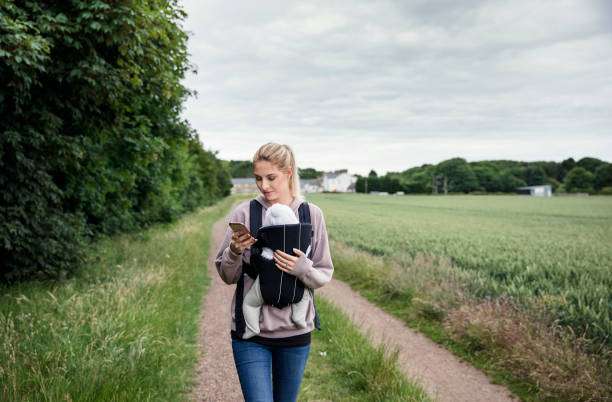
Structural temperature control: Air path and stress distribution determine how heat is managed.
Even with identical materials, the temperature experience of different baby carriers can vary significantly, and the most crucial factor is their structure. The structure determines whether airflow is smooth, heat dissipates quickly, and whether the recessed areas of the baby’s back tend to accumulate heat. It also determines where heat transferred from the parents’ skin is most concentrated. A good structural design is not just for support, but also for creating air circulation paths, maintaining a stable microclimate in different positions.
a baby carrier relies primarily on three components: the main back structure, the side openings, and the load-bearing structure in the shoulder and waist areas. If the main structure is a fully enclosed design, the contact area between the baby’s back and the parent’s chest and back is very large, making it difficult for air to circulate freely and potentially leading to localized overheating in summer.
The distribution of stress also affects the temperature control experience. When the shoulder straps bear the full weight, the parents’ shoulder temperature rises rapidly, and this heat is transferred to the baby along the material. If the baby carrier has reasonable stress distribution capabilities, such as through wider shoulder straps, segmented padding, and waist belt pressure diversion, then the parents’ body temperature will not be too concentrated, and the heat source felt by the baby will be reduced accordingly. The structure actually determines the rate of temperature accumulation, and many users’ experiences of “the more you use the carrier, the hotter it gets” or “the baby suddenly becoming restless” often stem from insufficient temperature control in the structure.
True structural temperature control doesn’t rely on a single vent, but rather on the design of the overall airflow path. For example, high-end baby carriers often feature a “heat dissipation structure,” creating a natural airflow channel in the baby’s lower back area to prevent heat buildup. Another type of baby carrier incorporates elastic fabric into the lining, forming an air cushion layer so that temperature transfer between parents and baby doesn’t involve direct contact but rather occurs through the air, resulting in slower temperature changes. The more sophisticated the structure, the more stable the temperature performance.
Interactive temperature regulation by the skin: The baby’s immature thermoregulation system is the root cause of temperature sensitivity.
Unlike adults, infants cannot actively regulate their body temperature. Their hypothalamic thermoregulatory center is not yet fully developed, making them particularly sensitive to changes in external temperature, especially the “speed of temperature change.” In other words, babies don’t cry because the temperature is too high or too low, but because the temperature changes too quickly. This is the third key aspect of temperature control in baby carriers.
Parents’ body temperature naturally changes during various activities. When parents walk briskly, climb hills, shop, or do housework, their body temperature rises significantly compared to a resting state, and this change is almost entirely transmitted to the baby pressed against their chest or abdomen. If the baby carrier ‘s material or structure cannot quickly dissipate heat when the parents’ body temperature rises, the baby will feel noticeably hot within minutes and react with restlessness, fidgeting, or crying. Conversely, if the baby carrier has good thermal barrier capabilities, such as reducing direct conduction through air gaps, the baby will remain emotionally stable for a longer period because the temperature changes they experience are very slow.
A baby’s immature sweating system also exacerbates the experience of temperature fluctuations. Infants have a limited number of sweat glands and cannot release heat through sweating like adults, thus relying on the structure and materials of the baby carrier to help dissipate heat. If the internal air doesn’t circulate, the baby’s skin, after producing a light sweat, will stick to the parent’s chest, creating a damp and cold feeling. This damp and cold stimulation can be more uncomfortable for the baby than high temperatures. Many parents believe their baby cries because of heat, but in reality, it’s more common for accumulated humidity to cause discomfort.
The essence of surface-level thermoregulation is to prevent changes in the parents’ body temperature from directly impacting the baby’s perceived safety range. A good baby carrier will reduce heat transfer when the parents are feverish and prevent the baby’s back from getting too cold when the parents are at rest, thus maintaining overall temperature balance.

Environmentally Adaptive Temperature Control: Outdoor wind speed, indoor humidity, and temperature difference create the most realistic temperature variations.
The environment is the most easily overlooked factor in temperature control performance, yet it has the greatest impact in real-world use. Many parents find that the heat of baby carriers outdoors in summer is completely different from that indoors, and the comfort in dry winter is vastly different from that on humid, rainy days. This is because the temperature, humidity, and wind speed of different environments will affect the material’s thermal conductivity, humidity evaporation, and air circulation speed, respectively.
The effect of wind speed is particularly noticeable in outdoor environments. When parents move around, wind enters from the sides, bottom, or shoulder strap gaps, creating natural airflow. If the structure supports this dynamic ventilation, such as having a three-dimensional air layer or multiple openings, the baby’s back will be cooler outdoors than indoors. In windless, hot outdoor environments, air has difficulty entering the inside of the carrier, making the carrier’s active heat dissipation capabilities crucial.
Humidity has a greater impact on the temperature control performance of baby carriers. When the air humidity is high, even if the material itself has good moisture absorption and wicking capabilities, evaporation will still be slower, causing moisture to accumulate on the baby’s back, making the baby feel sticky more easily. The higher the humidity, the more difficult it is for the air to carry heat away from the baby’s back, resulting in a significantly increased feeling of heat and stuffiness. Conversely, in a dry environment, the evaporation capacity of functional fibers will perform better, allowing the internal temperature of the baby carrier to quickly return to a balanced state.
Air-conditioned rooms are another common source of temperature differences. Many parents mistakenly believe that because air-conditioned rooms are cool, their babies must be comfortable. However, the sinking nature of cold air means that a baby’s back will be cooler than the parents’ chest. If the baby carrier itself dissipates heat too quickly, the baby will become restless due to the temperature difference on their back. This is why some parents must add a small blanket or windproof cover for their baby in air-conditioned rooms, while using a breathable baby carrier outdoors—the temperature control needs are completely opposite in these two environments.
A truly excellent baby carrier will exhibit different temperature control adaptability depending on the environment. For example, it can accelerate heat dissipation outdoors, maintain a stable temperature indoors, reduce damp and cold stimulation in hot and humid weather, and keep the baby’s back warm and stable in windy environments. The more balanced the temperature control performance, the more stable the baby will be in various environments.
Conclusion
a baby carrier is more crucial to a baby’s comfort than its supporting structure. The material determines the method of heat and moisture management, the structure determines the air circulation path, the interaction with the skin determines the rate of temperature change, and environmental adaptability determines its stability in real-world use. These four factors together constitute the baby carrier’s true temperature control capability. Only a carrier that truly understands the science of temperature control can maintain the baby’s comfort and the parents’ ease under various temperature, humidity, and usage conditions.