Baby Carriers and Attachment Relationships: An In-Depth Observation of Parenting Psychology

When I first used a baby carrier , I simply thought it would free my hands so I could carry my baby while doing some housework. Unexpectedly, my baby, clinging to me in the carrier, quickly settled in, sometimes falling asleep in less than two minutes. This got me thinking: Is a baby carrier more than just a parenting tool? Could it have deeper psychological significance? Today, I’d like to explore the relationship between baby carriers and baby attachment, drawing on the psychology of parenting, and why a good carrier benefits both parent and child.
Attachment Relationship in Parenting Psychology
In psychology, attachment is the deep emotional bond that develops between a baby and their primary caregiver. Research by psychologists Bowlby and Ainsworth suggests that secure attachment has a profound impact on a baby’s future personality, social development, and emotional regulation. Simply put, babies need a sense of presence and responsiveness, and this sense of security shapes their fundamental trust in the world.
So, what role does a baby carrier play here? It keeps the baby physically close, makes parents more sensitive to their needs, and creates more opportunities for interaction in daily life. These are all important conditions for forming a secure attachment.
The intimacy brought by the baby carrier
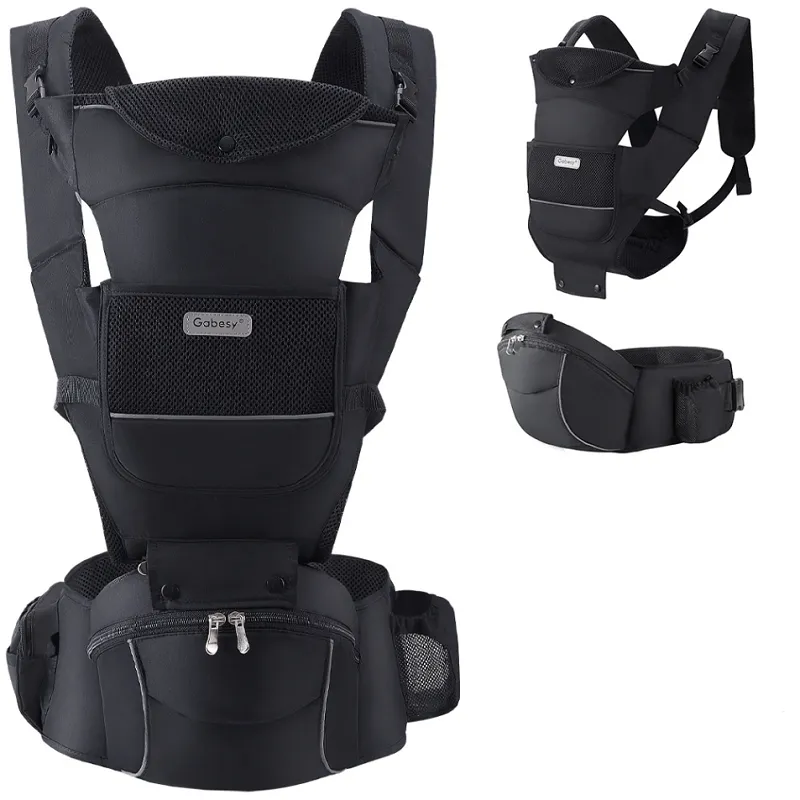
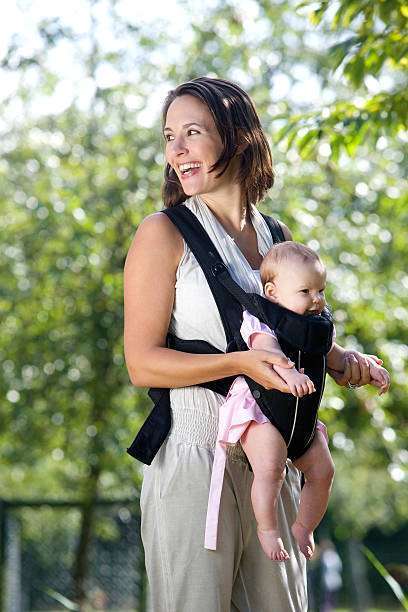
I often feel that when my baby is against my chest, she can hear my heartbeat and breathing, and I feel more at ease. Psychological research also shows that close physical contact can stabilize a baby’s heart rate and reduce crying. A 2009 British study found that mothers who frequently use baby carriers are more likely to develop a secure attachment with their children, which resonates closely with my own experience.
When I was queuing at the supermarket, I carried my baby on my back. She didn’t cry as much as she would if she were sitting alone in a stroller. Instead, she looked around curiously. I think this is because she felt safe and secure with me, so she was more willing to explore the outside world.
Dual support of comfort and attachment
I have to say, a well-designed baby carrier benefits the parent-child relationship in two ways. For example, the carrier I’m using now is made of eco-friendly cotton , which keeps my baby snug and comfortable, making it suitable for all-day use . I’ve since discovered that this multifunctional baby carrier has been a real help. Its ergonomics make it comfortable for my baby and my back, too. What surprised me most was its multiple carrying methods — front carry allows my baby to sleep comfortably close to me; back carry frees my hands for chores; and side carry makes it convenient for feeding or soothing outside. Switching between different scenarios has made life much easier for both me and my baby.
This left me with a profound realization: Only when parents are physically relaxed can they have more energy to respond to their baby’s subtle needs. Psychology has long emphasized that a parent’s sensitive response is key to secure attachment. Therefore, a good baby carrier not only considers the baby’s feelings but also subtly helps parents establish a stronger connection.
Reminders for using a baby carrier
Of course, a baby carrier isn’t a panacea. Attachment isn’t automatically established simply by purchasing a carrier; it requires genuine parental attention. For example, for a while, I was in the habit of looking at my phone while carrying my baby. The baby started crying non-stop, and I realized that the carrier only helps us get closer, but the true sense of security comes from my responsiveness and presence.
Also, be mindful of how you use the carrier, such as ensuring a healthy M-shaped support for your baby’s legs and avoiding prolonged periods of inactivity. This ensures both safety and comfort.
in conclusion
In my opinion, a baby carrier not only frees my hands but also provides me with a more intimate and personal connection with my child. From a parenting psychology perspective, its value lies in providing more opportunities for interaction in the attachment relationship. If, like me, you want to give your baby a greater sense of security in daily life while also making yourself feel more relaxed, a good baby carrier is a worthwhile choice.
FAQ
1. Will a baby carrier affect the development of the baby’s hip joints? No, as long as you choose a carrier that is ergonomically designed and can maintain an M-shaped leg posture, you can avoid adverse effects.
2. Will it be too hot to use a baby carrier in the summer? This can be improved by choosing a breathable, eco-friendly cotton material, so your baby won’t feel stuffy even when it’s close to their skin.
3. What is the recommended age for a baby carrier ? Generally, it can be used from newborn onwards. As the baby grows, choose an adjustable fit carrier that can accompany the baby into early childhood.
4. Will a baby carrier affect parent-child interaction? No, on the contrary, it can make parents more sensitive to their baby’s needs and help build attachment.