Dads can easily carry their babies too: Real-life experience sharing of baby carrier

In traditional parenting, baby carriers seem to be exclusively for mothers. Whether in shopping malls, subways, or parks, we often see mothers gently carrying their babies on their backs, while fathers typically carry bags or push strollers, acting somewhat “supportively.” However, with the changing roles of the younger generation of fathers, more and more men are actively participating in childcare, and baby carriers are gradually becoming part of their daily routine. This article compiles the experiences of several male users, exploring what “dads carrying babies” truly means from different life backgrounds, physical conditions, and psychological feelings.
I. From Observation to Trial: Men’s First Impressions of Baby Carrier
Many fathers, when first encountering baby carriers, often react with confusion, thinking they “look complicated” or are “not suitable for them.”
Mr. Li, 32, shared that he initially found baby carriers as cumbersome as hiking gear, with “all those buckles and straps giving me a headache.” However, encouraged by his wife, he tried putting his baby in the carrier. The first time they went out, he was surprised to find his baby sleeping soundly against his chest; that feeling of being relied upon was “a little addictive.”
Another father, Mr. Zhao, said he was initially worried that his broad shoulders and tall stature would make it uncomfortable to use. However, after trying several adjustable baby carriers, he found them to be very comfortable, “even more comfortable than I expected.” This process of “from resistance to acceptance” is a common experience for many men. They often need to try it out themselves to truly appreciate the convenience and emotional connection behind a baby carrier.
II. Comfort and practicality: The details that dads care about most
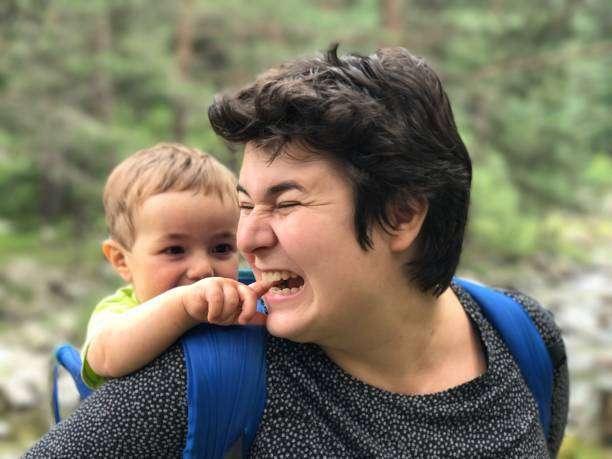
Compared to mothers, fathers pay more attention to structural design and body support when choosing and using baby carriers. Mr. Lin, an active person, mentioned that he values “lumbar support and shoulder strap width” the most.
During a two-hour walk in the park, he clearly felt the advantages of the baby carrier: “It doesn’t strain my shoulders or compress my back.” Another father, Mr. Chen, who faces significant work pressure, emphasized its practicality in “freeing up his hands.” He said, “Holding my baby while doing housework, picking up packages, and taking him for a walk downstairs makes me feel much more free.”
In addition, many fathers have noticed the differences in materials. Breathable, lightweight fabrics make baby carriers more comfortable in summer, while sturdy, rigid straps provide a greater sense of security in winter.
This feedback suggests that men tend to evaluate functions more rationally during the experience—they view baby carriers from a “device” perspective, focusing on structure, load-bearing capacity, and durability, while an emotional sense of intimacy often arises naturally during use.
III. An Extension of Intimacy: Baby Carriers Bring Father-Son Relationships Closer
Almost all the fathers interviewed mentioned one thing: baby carriers changed their relationship with their babies.
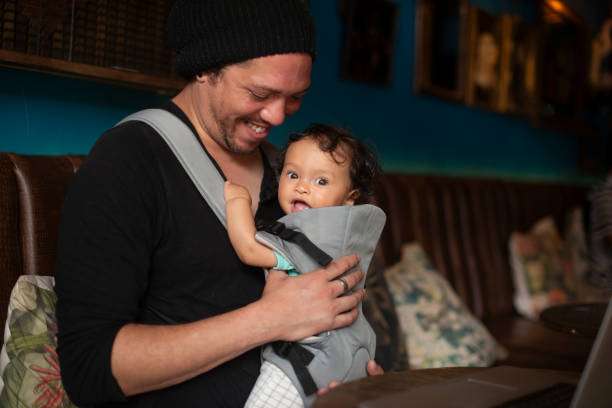
Before, they felt that spending time with their babies meant “helping out with them” or “playing with them for a while.” But when their babies were carried on their chests, the feeling of skin-to-skin contact and synchronized breathing made them experience the weight of being “depended on” for the first time.
Mr. Wang described the experience: “His little head rested on my chest, and I could feel him breathing. If I walked a little faster, he would move his head; if I stopped, he would fall asleep quietly.”
This subtle physical communication allows fathers to better understand the emotional aspect of parenting—not just “helping mothers share the burden,” but truly becoming a source of security for their children.
Baby carriers also help them find new confidence in public spaces. One new dad said, “I used to feel embarrassed taking my baby out, but now I’m actually quite proud. When people see me carrying my baby, they compliment me, saying, ‘That’s a great dad.'”
IV. Real-world experiences in different scenarios: travel, housework, and emotional support
Male users’ experiences are often closely related to their daily lives.
For dads who frequently take their babies out, a baby carrier means freedom of movement. On subways, in shopping malls, and at tourist attractions, places for strollers can be crowded and inconvenient, but a baby carrier makes things much easier. “Taking a baby out is no longer a burden but rather more flexible.” This is a common consensus.
At home, the baby carrier becomes a “multitasking marvel.” Mr. Li said with a smile, “I cook noodles while carrying the baby on my back, and the baby is surprisingly quiet when he sees me busy.”
This experience allows fathers to find a balance between housework and childcare and also makes the division of labor in the family more equal.
Some fathers also mentioned that baby carriers have a positive impact on their emotional well-being.
The feeling of helplessness when a baby cries and they can’t hold or soothe them is common. But with a baby carrier, they found that physical contact quickly calms the baby and also relieves their own anxiety. Mr. Chen said, “That process from panic to calm isn’t just about soothing the baby; it’s about soothing me too.”
V. Real-world obstacles and changes in mindset for men using baby carriers
While more and more fathers are willing to try baby carriers, some psychological and social barriers still exist.
Some worry about being stared at—will carrying a baby on the street be seen as “unmanly”? But this concern is gradually dissipating. Modern society no longer expects fathers to be “serious caregivers,” but rather “gentle companions.”
Many men said they initially felt a little awkward, but all their discomfort vanished when they saw their babies laughing happily and their wives looking relieved.
“Actually, nobody really cares whether you’re carrying the baby or not; what matters is that you’re involved,” one father said at the end of an interview.
This shift from “helping” to “participating” not only changed the father’s parenting role but also made men begin to re-examine their relationship with their families.
VI. From Individual Experience to Social Trend: The Rise of Dad Baby Carry Culture
With changing parenting philosophies among fathers, “dads carrying babies on their backs” is becoming a social trend.
Many baby carrier brands are starting to design more unisex styles, with color schemes shifting from soft pink to shades of gray, blue, and military green, and the shoulder straps are being designed to fit men’s physiques better. On social media, more and more fathers are sharing photos and experiences of carrying their babies, forming a small community of “dad baby carrier culture.”
The emergence of this culture is not merely a change at the product level but also a loosening of family structures and social attitudes. Fathers are no longer bystanders but builders of parent-child relationships. Baby carriers have become a symbol of this role shift—they allow fathers to experience the warmth of being “depended on” and also allow children to feel the stability and closeness of paternal love from a young age.
VII. Conclusion
For these fathers sharing their experiences, the baby carrier is more than just a parenting tool; it’s an emotional bridge.
It allows fathers to grow from the traditional role of “helper” to a true companion, and it helps them rediscover gentleness and patience in the process of caring for their babies. For the baby, the sense of security and comfort it provides may become their earliest memory of fatherly love.
When more and more fathers choose to carry their children on their backs, it’s not just a change in attitude but also an increase in family warmth. After all, parenting knows no gender, and love knows no method.