
Many new mothers experience an unspoken psychological distress after childbirth: a fear of intimacy. Dramatic bodily changes, hormonal fluctuations, the pressure of breastfeeding, and the overwhelming need to devote all their attention to their baby can leave mothers feeling alienated from their partners and even their own bodies. This feeling not only impacts the relationship but can also trap mothers in a cycle of self-doubt and anxiety. This disconnect between body and mind makes intimacy unfamiliar, even leaving mothers afraid to touch and be touched.
The emotional effect of baby carrier
a baby carrier not only frees mothers’ hands but also offers an unspoken psychological healing effect. Carrying a baby close to the mother’s body allows for constant skin-to-skin contact, which stimulates the release of oxytocin, the “safety hormone.” Oxytocin not only relaxes mothers but also strengthens their sense of acceptance of their own bodies. When a mother feels the dependence and warmth of her baby, her body ceases to be a strange entity after childbirth and becomes a vehicle for intimacy once again.
Body Reconnection Practice
Using a baby carrier is more than just a physical fit; it’s a way for mothers to reconnect with their bodies:
tactile healing
carrier transmits the baby’s breathing, body temperature, and heartbeat directly to the mother, gradually awakening neglected body perceptions. Every touch is a gentle reminder of the body, allowing the mother to feel her own strength and softness.
carrier
style can distribute pressure across the back and shoulders, allowing the body to maintain a natural posture while holding the baby. This gentle, continuous movement not only strengthens the core muscles but also helps mothers gradually regain a sense of control over their body.
subtle
sense of control and protection. This feeling extends to intimacy, making mothers more receptive to physical contact and gradually moving from fear to comfort.
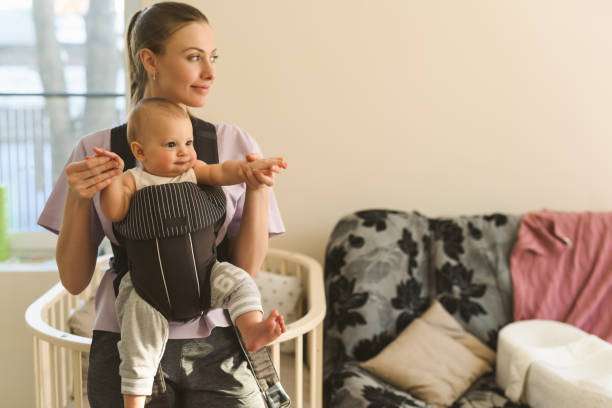
Key points for choosing a baby carrier
To achieve the healing effect, the choice of brace is also very important:
Comfort : Shoulder straps and waist belt should be thick and soft enough to relieve pressure.
Breathability : Both mother and baby need breathable materials after delivery to avoid overheating and discomfort.
Adjustability : As baby grows and mom recovers, the carrier’s adjustable features allow for continued comfort.
Safety : Ensure that the baby is firmly fixed, and the mother can feel more at ease when using it, so as to truly achieve the emotional healing effect.
Establish daily intimacy rituals
Beyond physical closeness, baby carriers can also help mothers establish “bonding rituals” to simultaneously restore their mental and physical well-being. For example, taking a walk during a baby’s nap, doing light stretches at home, or participating in baby-care activities with a partner can gradually integrate physical and psychological experiences. In this way, mothers not only build a close bond with their baby but also gradually reaccept their own bodies, gradually reducing their fear of intimacy.

Summarize
Postpartum fear of intimacy isn’t an individual issue; it’s a common phenomenon caused by both physiological and psychological factors. As a simple and practical parenting tool, the baby carrier not only provides convenience for mothers but also subtly provides psychological healing. By being close to their baby, reconnecting with their body, and enhancing their sense of security, mothers can gradually overcome their fears and rebuild trust in their bodies and intimacy.