Sensory Science in Baby Carrier: How Do Light and Noise Affect a Baby’s Mood?

1. The baby carrier is the most natural “sensory laboratory.”
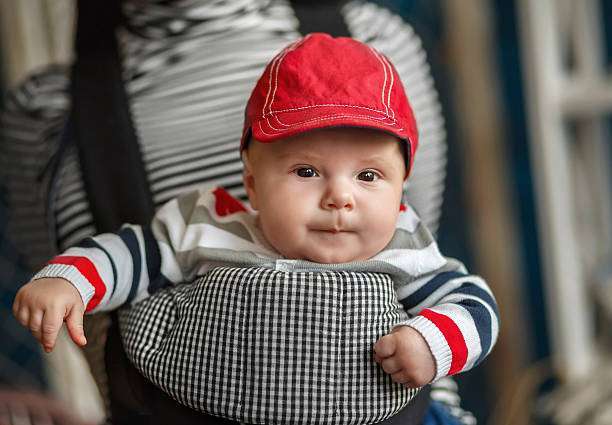
When parents put their babies in a baby carrier, it may seem like just a convenient way to get around, but it’s actually a natural sensory experiment. The first few months after birth are a period of rapid development for an infant’s visual, auditory, and tactile systems; they are extremely sensitive to light and sound. A baby carrier allows the baby to be close to the parents’ bodies, experiencing external stimuli in a safe embrace, which is the first step in helping them learn the “laws of the world.”
Psychological and physiological studies have shown that babies carried in baby carriers cry for shorter periods, have more stable heart rates, and are more adaptable to environmental changes. This is because baby carriers create a “safe and stimulating environment”: the parents’ body temperature, heartbeat, and breath stabilize the baby’s sensory foundation, making it easier for them to regain balance when exploring external light and sound.

II. Light: The “Brightness and Darkness” Challenge of an Immature Visual System
Newborns’ pupils are not yet fully developed, and they may not be able to contract quickly enough when exposed to bright light, resulting in frowning, squirming, or even crying. Conversely, in dimly lit environments, the lack of visual focus can also trigger anxiety. Light is not only a visual stimulus for infants but also affects their endocrine system. When the light is too bright, cortisol levels rise, putting the body in an alert state, making it harder for the baby to calm down.
In a baby carrier, a baby’s field of vision is narrow, but light can still enter their eyes through clothing, collars, or reflections. Therefore, soft, stable lighting is especially important. Studies have shown that warm white light between 3000K and 4000K is closest to natural light and can help babies stay calm and focused. When going out, parents should try to walk in the shade or use a baby carrier with a sunshade to avoid direct sunlight or strong glare.
When babies squint or squirm frequently, it doesn’t mean they’re being naughty or sleepy; rather, it’s their visual system “calling an alarm.” Gently adjusting the direction or position of the baby carrier and slightly dimming the light can help them regain comfort.
III. Noise: Quiet does not equal safe
In terms of auditory development, infants often react contrary to adult intuition. A completely quiet environment can be unfamiliar and unsettling for them. In the womb, they are constantly surrounded by the low-frequency background sounds of heartbeat, blood flow, and breathing; that rhythmic noise is a source of security. After birth, moderate amounts of everyday sounds and natural noises can actually help soothe their emotions.
Experimental data shows that infants are most relaxed and fall asleep easily in environments with mild noise levels of 40 to 50 decibels (such as the sound of leaves rustling or people talking). However, when the noise exceeds 70 decibels, such as in subways, shopping malls, or construction sites, their heart rate increases significantly, and they may even sweat slightly. Prolonged exposure to such environments can not only increase the frequency of crying but may also interfere with the formation of auditory memory.
A baby carrier plays a crucial role at this time. Babies can clearly hear their parents’ heartbeats and breathing; this low-frequency rhythm is the most familiar “background sound” for them. Therefore, in noisy environments, parents don’t need to raise their voices but rather slow down their speech and speak to their babies in a low, gentle tone to help them block out external distractions.
IV. The Interaction of Light and Sound: The Emotional Effect of Sensory Overlap
Unlike adults, infants do not perceive light and sound separately; their nervous system integrates multiple sensory inputs. When light is strong and sound is loud, the amygdala and hypothalamus are activated simultaneously, releasing stress hormones and causing mood swings. Soft light and quiet environments, on the other hand, promote parasympathetic nerve activity, allowing the body to gradually enter a relaxed state.
Studies monitoring a baby’s heart rate and skin temperature in a baby carrier have found that in soft light and sound conditions below 45 decibels, the heart rate decreases by an average of about 12%, while skin temperature rises slightly, indicating a calm and comfortable state. In contrast, in environments with strong light and noise, the heart rate increases by about 18%, and the baby’s hands and feet sweat slightly. These subtle changes are how the baby’s body “records” the safety of the environment.
Parents can conduct simple observations at home. For example, playing soft music under dim lighting often helps babies fall asleep faster; turning off the music in a bright environment makes them more likely to look around and move around. Through these sensory experiments, parents can gain a more intuitive understanding of their baby’s emotional triggers, allowing them to make more scientific adjustments in daily parenting.
Fifth, parents’ emotions are a baby’s “second sense.”
While external stimuli are important, the parents’ own state is the most stable signal among all influences. Through the baby carrier, the baby is close to the adult’s body and can sense body temperature, muscle tone, and breathing rhythm. When external light or noise is too strong, if the parents maintain steady breathing, relaxed shoulders, and a gentle tone of voice, the baby’s nervous system will “mirror” this stability, thus restoring balance.
Psychology calls this phenomenon “emotional co-regulation.” An infant’s brain subconsciously mimics the physiological rhythms of its caregiver. When parents remain calm in a chaotic environment, the baby’s heart rate drops more quickly; conversely, when parents show signs of tension or frown, the baby’s body immediately responds to stress.
Therefore, true “sensory regulation” is not just about controlling light and sound but also about conveying safety signals from parents. The significance of the baby carrier lies in making this kind of emotional resonance at the physical level possible.
VI. From Experimentation to Child Rearing: Insights from Scientific Sensory Experiences
infancy is actually a window into understanding early emotional regulation. Light, sound, body temperature, and breathing—these seemingly minor environmental factors subtly shape a baby’s neural connections and sense of security. For parents, the most scientific approach to parenting is not to completely isolate stimulation but to create “controlled stimulation”—allowing the baby to experience the complexity of the world in a safe embrace.
From soft lighting to steady background sounds, from the parents’ breathing rhythm to the frequency of their speech, every hug in a baby carrier is a gentle sensory education. As parents learn to regulate their environment and their own emotions, babies are also learning simultaneously that the world can be understood, trusted, and comforted.
This is the true meaning of baby carrier parenting—understanding temperature scientifically and building safety through the body amidst everyday light and sound.