Baby carrier winter warmth guide: Keeping your baby warm and safe during winter.

I. Baby carrier challenges in the cold season
presents a double challenge of “temperature and safety” for families using baby carrier. The outside is bitterly cold, while indoors it’s warm and comfortable, creating a significant temperature difference that can easily cause babies to fluctuate between hot and cold. Furthermore, baby carriers are close-fitting and have limited breathability, making it easy for babies to sweat, catch a chill, or experience skin irritation if not handled carefully. Properly keeping babies warm is not only about their comfort but also about ensuring smooth breathing and maintaining a balanced body temperature.
A baby carrier in winter: first, dressing the baby in too many layers, causing the back to become stuffy and sweaty; second, neglecting to keep the extremities warm, resulting in the baby’s hands and feet getting cold. In fact, the key to keeping the baby warm in winter is not “wearing more clothes” but “balancing layering with breathability.”
II. Layering principle: Baby carrier is not outerwear.
First, it’s important to understand a basic principle: the baby carrier itself has a certain heat-retaining function. When a baby is wrapped tightly against their parents’ chest, body heat is transferred between them, creating a natural “human warmth.” Therefore, the inner layer should primarily consist of lightweight, moisture-wicking clothing.
It is recommended to divide your outfit into three layers:
Inner layer: Soft pure cotton or bamboo fiber bodysuit to help absorb sweat.
Mid-layer: A thin fleece or light down vest for basic warmth.
Outer layer: A windproof layer covered by both parents, which can be a cape, cloak-style coat, or a dedicated baby carrier cover.
This layered design allows for flexible adaptation to temperature changes. For example, in shopping malls or subways, parents can simply lift the outer windproof cover to allow their baby to dissipate heat without having to frequently change clothes.
III. Baby carrier outer layer protection: a balance between warmth and breathability
baby carrier accessories on the market designed for winter, such as windproof covers, windproof capes, and blanket-like wraps. When choosing, pay attention to three key points:
Breathable fabric: Prevents stuffiness and dampness, especially on the baby’s back.
Coverage: Should protect the head, neck, back, and legs.
Easy to adjust: Features a zipper and buckle design for quick adjustment when entering or leaving indoors.
Many parents like to wrap their babies in blankets or coats, but safety should be taken into account. Thick fabrics may obstruct the mouth and nose, causing breathing difficulties. Specialized windproof covers usually have ventilation holes or three-dimensional space, providing both warmth and safety.
IV. Body Temperature Interaction Between Parents and Baby
A baby carrier is its close physical contact. In winter, the parents’ body temperature becomes the most stable heat source for the baby, but it can also create “overheated areas.” When in prolonged contact, the position or tightness can be adjusted appropriately to avoid localized heat buildup.
Parents are advised to gently touch the back of their baby’s neck or back every half hour or so during use to check if the temperature is too high or too low. The ideal temperature is a warm and dry back of the neck; if there is significant sweating, it indicates that the baby is overdressed or that air circulation is poor, and adjustments should be made promptly.
V. Coping with the temperature difference between outdoor and indoor environments
When taking a baby out, the most difficult thing to manage is often the temperature difference between going in and out. The correct approach is to let the outer layer of clothing handle the temperature regulation.
Before going out, dress your baby in two layers indoors, and then add a baby carrier or coat outdoors. When entering a shopping mall or car, do not immediately remove all clothing; instead, lift the outer layer to allow the body temperature to gradually equalize. This “buffer transition” can effectively avoid the risk of catching a cold due to alternating hot and cold temperatures.
In addition, the air is drier in winter, and babies’ skin is prone to peeling or redness. When using a baby carrier, you can apply a layer of baby skin cream to the contact areas (such as cheeks, chin, and neck) to reduce friction and dryness.

VI. Details on keeping limbs and head warm
Babies lose heat quickly from their extremities, especially when carried on a chest, and their little feet are easily exposed. Choose a onesie with foot warmers or warm socks, which allow for easy movement while keeping them warm. For the head, a soft, fitted hat is recommended, preferably with slight ear protection.
For families who like to use baby carriers, make sure the fabric covering the area below the waist is sufficient. If the fabric is too thin or too short, it will allow wind to get in through the legs, affecting overall warmth.
VII. Safety is always the top priority.
While keeping your baby warm in winter, don’t forget the safety rules for your baby carrier . No covering should obstruct your baby’s face; parents should always be able to see their baby’s breathing and facial expressions. When using thick clothing, ensure the baby carrier’s shoulder straps and waistband still fit snugly against the body to avoid compromising stability due to bulky clothing.
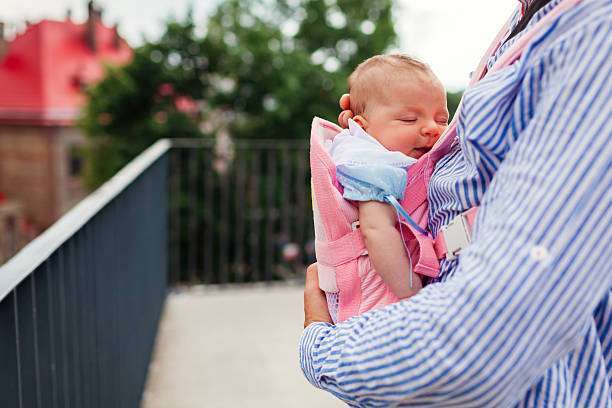
Ideally, the baby should be nestled against the parents’ chest, with their head lightly touching their chin, their face turned to the side, and breathing smoothly; there should be no noticeable gap between the baby carrier and the parents’ bodies.
VIII. The Significance of Intimate Winter Time
In the cold season, a baby carrier is not only a means of transportation but also a connection of warmth. The warmth of a baby pressed against one’s chest brings peace of mind to parents in the winter wind, and the sleeping face of a baby in a warm embrace becomes the softest scenery in winter.
When warmth, safety, and intimacy are balanced, the baby carrier is no longer just a functional piece of equipment but a daily part of growing up—a bond woven with warmth.