7 intimate moments with your baby carrier: Pets getting close to your baby can trigger an emotional storm

In the process of raising children, baby carriers are not only a tool for parents to free up their hands but also an important medium for parent-child interaction. When pets enter this scene, the family atmosphere often ignites into a vortex of emotions. As family members, cats and dogs have complex and subtle emotional reactions to the arrival of a new life. Their approach, observation, interaction, or retreat—every action can trigger emotional fluctuations in both parents and children. These intimate moments are both surprising and challenging, showcasing both the pet’s adaptability to the family and revealing the subtle changes in the family’s emotional dynamics.
This article analyzes seven intimate moments that occur during the use of a baby carrier , comprehensively dissecting the emotional turmoil triggered by a pet’s approach to a baby, from pet behavior and psychology to parental emotional reactions and the impact on the family ecosystem. Through real-life cases, behavioral observations, and scientific explanations, parents can understand their pets’ motivations, learn to balance parenting and pet management, and transform these intimate moments into positive resources for family interaction.
I. Initial Approach: A Blend of Curiosity and Caution
When parents first use a baby carrier to hold their baby, pets often show great curiosity. They approach the baby, carefully sniffing and observing the structure of the baby carrier and the baby’s scent. This moment is filled with a mixture of caution and exploration; a cat might slowly extend its paw to gently touch the edge of the baby carrier , while a dog might quietly sniff and keep a certain distance. Parents are easily surprised by their pets’ behavior during this process, experiencing either joy or anxiety.
This initial approach reflects the pet’s reassessment of the home environment and the safety of the new member. They are establishing a cognitive connection while also testing their own boundaries. The parents’ reactions directly influence the pet’s emotional trajectory. A gentle and affirming attitude will help the pet adapt to the baby carrier setting more quickly and gradually develop a close behavioral pattern.
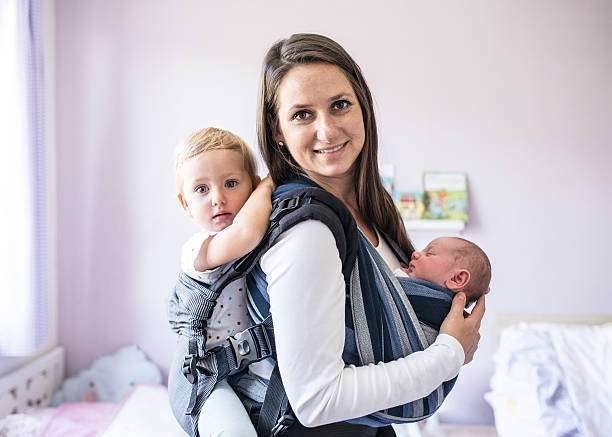
II. Touch Interaction: The Budding of Intimacy
As family routines continue, pets gradually begin to engage in tactile interactions with the baby in the baby carrier . A cat might gently rub against the baby’s hand or cheek, while a dog might lightly touch the baby’s arm with its nose. This close contact is not only an exploratory behavior but also a form of emotional expression and the budding of intimacy. Parents often experience a whirlwind of emotions during this process: surprise and joy, but also a possible hint of worry or tension.
Scientific research shows that moderate physical contact helps strengthen the emotional bond between pets and babies, while also stimulating the infant’s sensory development. Parents can guide, supervise, and appropriately encourage their pets to participate in interactions within safe boundaries, thereby establishing a positive emotional cycle within the family during intimate moments.
III. Accompanying gaze: An experience of emotional resonance
Once pets become accustomed to the baby’s presence in the baby carrier , they often exhibit prolonged periods of close observation. Cats might sit quietly beside the baby carrier , watching the baby’s movements, while dogs might stay by their parents’ feet, silently watching over them. This close observation allows parents to experience an emotional connection, demonstrating both the pet’s protective instincts and strengthening the emotional bond between family members.
The presence of companionship gaze indicates that pets are becoming more adaptable to the environment of babies and baby carriers . They learn through observation, build cognitive models, and develop an understanding of family rules. Parents can reinforce positive behaviors in their pets through verbal reassurance, eye contact, and gentle touch, while alleviating potential anxiety and making intimate moments a source of emotional resonance and security.
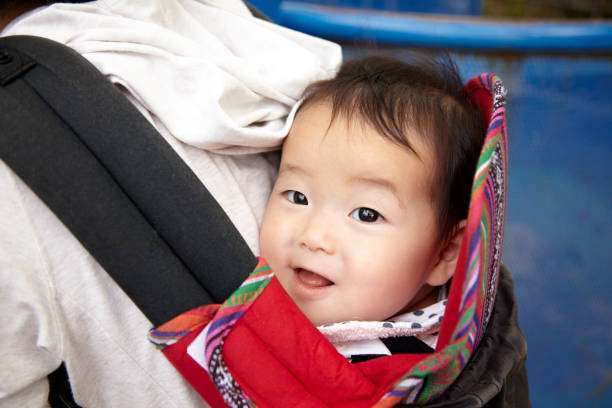
IV. Imitation of Actions: A Sign of Social Learning
While being held by a baby carrier , pets sometimes mimic the parents’ actions or the baby’s behavior. For example, a cat might try to gently adjust its body position, or a dog might imitate the parents’ posture of bending down or approaching the baby. This imitative behavior is not only a manifestation of social learning but also shows the pet’s progress in understanding family interactions and role relationships. Parents who witness this are often amazed by their pet’s sensitivity and intelligence, while also experiencing the vibrancy and fun of family interactions.
Imitation demonstrates that pets are actively participating in reshaping the family ecosystem. They learn behavioral norms through observation and interaction, while simultaneously building an emotional bond with the baby. Parents can encourage positive imitation through affirmation, rewards, and safe guidance, making family interactions more harmonious and enriching.
V. Protective Behavior: The Climax of the Emotional Vortex
As pets become more familiar with the baby in the baby carrier , they may exhibit pronounced protective behaviors. Dogs might gently stand guard beside the baby, preventing strangers from approaching, while cats might physically block potential disturbances. This protective behavior reflects the pet’s high level of care and responsibility towards family members, while simultaneously triggering emotional highs in the parents: joy,and even surprise at the pet’s keen emotional response.
Protective behavior is not only an instinctive reaction but also reflects the depth of the emotional bond between pets and family members. Parents can ensure that protective behavior does not pose a threat to their pets through appropriate guidance and safety measures, while allowing the pet to gain psychological satisfaction from participating in the protection process, thereby further strengthening the close relationship.

VI. Cuddling and Companionship: A Manifestation of Trust and Dependence
baby carrier use, pets sometimes choose to snuggle up to their parents and baby, forming close physical contact. This snuggling behavior is a direct expression of trust and dependence, demonstrating the pet’s complete adaptation to the family environment. Parents often experience a surge of emotions at this moment, a warm sense of happiness accompanied by a slightly tense sense of responsibility.
Cuddle behavior helps strengthen emotional bonds between family members while providing psychological and physiological comfort. Parents can make cuddling a safe and positive moment of intimacy by maintaining proper holding postures, observing their pets’ physical cues, and engaging in appropriate interaction, thus promoting the mental health and emotional stability of family members.
VII. Interactive Games: Enhancing Intimacy
After a period of adjustment and trust building, the pet and baby carrier may enter an interactive play phase. The cat might gently pat the baby’s fingers, while the dog might participate in light activities with the parents. This interactive play not only deepens intimacy but also stimulates the emotional energy of family members, bringing intimate moments to a climax. Parents experience the joy of their pet and baby growing together, while simultaneously enriching and diversifying family interactions.
Interactive games elevate close relationships, fostering emotional bonds between pets and babies and providing parents with a greater sense of accomplishment and emotional satisfaction in the parenting process. Through scientific guidance, behavioral observation, and safety management, parents can make interactive games a highlight of daily parenting, further strengthening the emotional ties between family members.
Conclusion: The Intimacy Cycle and Family Emotional Growth Brought About by Baby Carriers
a baby carrier —initial approach, touch and interaction, companionship and gaze, imitation of actions, protective behavior, cuddling and companionship, and interactive play—fully illustrate the process of a pet and baby establishing an emotional bond.
These moments not only evoke a powerful emotional response in parents but also promote the dynamic optimization of the family ecosystem. Through scientific observation, positive guidance, and safe management, parents can transform their pet’s behavior into parenting advantages, enabling family members to achieve mutual growth on emotional, behavioral, and psychological levels. A baby carrier not only carries the child’s growth but also fosters the sublimation of family emotions and the harmonious development of the pet relationship, making these intimate moments the most precious memories in family life.