5 Comfort Secrets for Baby Carriers: Keeping Your Baby Comfortable and Happy All Day

Baby carrier have become an indispensable tool in modern family parenting. They not only free up parents’ hands and make daily life more convenient but also strengthen parent-child interaction and emotional connection. However, many parents, when choosing a baby carrier, often only focus on the softness of the material, the support of the shoulder and waist straps, and the baby’s posture, neglecting the significant impact of comfort on the baby’s mood and the parents’ experience. This article will reveal the secrets to baby carrier comfort from five aspects, ensuring the baby’s comfort and happiness throughout the day while making parenting easier for parents.
1. Suitable shoulder strap and waist belt design: the foundation of comfort
of a baby carrier comes from the design of its shoulder straps and waistband. Shoulder straps that are too narrow or insufficiently padded can cause concentrated pressure on the parents’ shoulders, leading to soreness and fatigue after prolonged wear, which indirectly affects the baby’s postural stability. Conversely, wide and properly padded shoulder straps distribute weight evenly across the shoulders, reducing localized pressure.
The support provided by the waist belt is equally important. The baby’s weight is transferred to the parents through the carrier. If the waist belt is poorly designed, the pressure will be concentrated on the lower back, causing back pain for the parents. At the same time, the baby may easily lean forward or slide, affecting comfort. High-quality baby carriers typically use wide waist belts with adjustable angles to ensure even weight distribution for the baby while allowing parents to maintain a natural posture and reduce physical strain during extended wear.
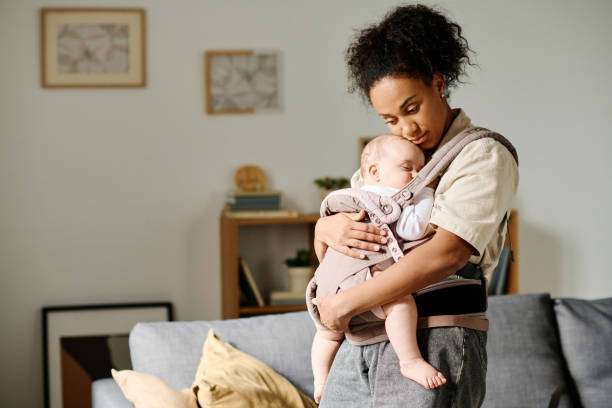
II. Scientific Back Support Structure: Ensuring Healthy Posture for Your Baby
A baby’s posture in a baby carrier directly affects the development of their spine and hip joints. A comfortable baby carrier should not only allow the baby to fit snugly against the parent’s chest or back but also provide scientific support to help the baby maintain a natural M-shaped leg posture and a slight C-shaped back. This design makes the baby feel safe and promotes healthy development of the spine and hip joints.
Back support structures are typically achieved through three-dimensional design, such as creating a suitable support angle between the back panel and shoulder straps to prevent the baby’s body from slipping or leaning forward. A high-quality baby carrier maintains stability in the shoulder blades and lower back when the baby is seated, distributing the baby’s weight evenly across the carrier and reducing localized pressure. This stability not only keeps the baby comfortable during movement but also enhances the parents’ sense of security during daily activities.
III. Breathable materials and temperature regulation: Keeping you dry and comfortable
A baby’s skin is delicate and very sensitive to changes in temperature and humidity. If the carrier material has poor breathability, prolonged wear can easily cause localized dampness and stuffiness, and may even lead to skin allergies or rashes in the baby. Therefore, breathable material is one of the core elements of a comfortable baby carrier.
Modern high-quality baby carriers often use mesh fabric, functional fibers, or soft cotton, which not only wick away sweat quickly but also allow for air circulation, forming a temperature buffer layer. This keeps the baby’s back dry even during active summer months and prevents sudden temperature drops in winter or air-conditioned rooms, keeping the baby warm and safe. The breathability of the materials combined with the carrier’s structural design maximizes comfort, ensuring the baby stays secure all day.

IV. Dynamic stability design: Comfortable for baby’s movements
Everyday childcare isn’t a static activity; parents need to walk, go up and down stairs, bend over to pick things up, or do housework. These actions all generate varying degrees of vibration and inertial impact on the baby. If a baby carrier is only comfortable when stationary but cannot maintain stability during dynamic movements, the baby is prone to swaying or leaning forward, thus affecting comfort and a sense of security.
High-quality baby carriers typically enhance dynamic stability through segmented padding in the shoulder straps, reinforced back panels, and pressure-distributing waist belts. No matter how parents move or bend over, the baby maintains a stable posture, avoiding frequent body adjustments and refraining from crying due to discomfort. This dynamic stability not only makes the baby feel safe but also reduces the psychological burden on parents during movement, making parent-child interaction more natural and relaxed.

5. Suitable for extended wear, making it comfortable for both parents and babies.
A comfortable baby carrier is not only important for short-term use but also for extended periods of wear. Many parents may use baby carriers when going out, shopping, or taking long walks. If the carrier is not designed properly, the shoulders, waist, and back can easily become fatigued, and the baby may also experience poor posture or discomfort, which can affect their mood.
High-quality baby carriers , with their well-balanced weight distribution, soft padding, and adjustable design, ensure parents’ comfort during 2-hour or even 5-hour wear sessions, while providing continuous support for the baby’s back and hips, maintaining a natural posture. This extended comfort not only improves parenting efficiency but also enhances parent-child interaction, keeping the baby safe and happy throughout the day.
Summarize
A baby carrier involves not only the softness and support of the materials but also the design of the shoulder straps and waist belt, the back support structure, breathability, dynamic stability, and adaptability to prolonged wear. By focusing on these five comfort secrets, parents can choose a carrier that is truly suitable for themselves and their baby, ensuring the baby stays safe and happy throughout the day, while making the parenting process easier and more enjoyable. Choosing a high-quality baby carrier is key to enhancing parent-child relationships and the parenting experience and is also an important guarantee for ensuring the baby’s healthy development.