Why do Eastern parents prefer baby carriers ? Understanding the cultural roots of childcare concepts

On the streets around the world, you’ll notice an interesting phenomenon: Eastern parents tend to use baby carriers more often , while Western parents prefer strollers. The former keeps their children close to their bodies, ensuring near-constant skin-to-skin contact; the latter allows their children to rest securely in independent strollers, offering freedom and comfort. While these seemingly simple choices in parenting approach, they conceal deeper cultural and philosophical differences.
1. Close attachment: The concept of “closeness” parenting in Eastern culture
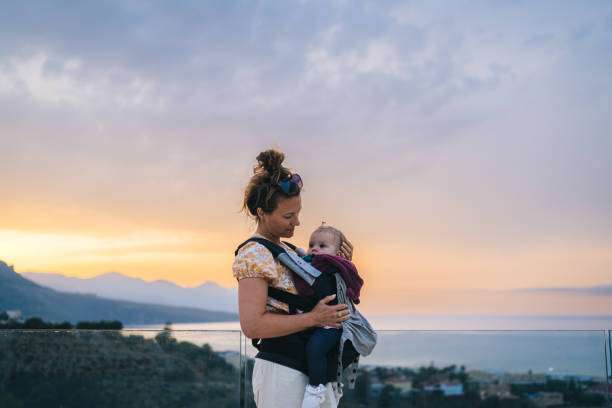
In many Eastern cultures, the core of the parent-child relationship is the emotional bond of closeness. Traditional families emphasize the “heart-to-heart connection” between mother and child and “skin-to-skin contact,” believing that physical contact is not only about care but also about emotional transmission. Baby carriers perfectly align with this concept—they allow babies to rest against their parents’ chests, allowing them to hear their heartbeat, feel their body warmth, and gain a sense of security.
In psychology, this high frequency of physical contact is known as “attachment parenting.” Research shows that infants who receive sufficient physical attachment early in life exhibit better emotional regulation and social trust as they grow. In Eastern families, this attachment relationship is often seen as a manifestation of love and a natural way of “growing together.”
2. Parenting Consensus under Collective Culture
Eastern societies generally value family and community connections. Children are not only the individual responsibility of their parents, but also a part of their family and society. This cultural atmosphere encourages parents to “keep their children close by”—whether doing housework, traveling, or visiting relatives and friends, carrying their children on their backs means they are always at the center of family life.
In contrast, Western individualistic culture emphasizes independence and boundaries. Strollers are not only convenient tools but also symbolize a child’s independent space, creating a clear sense of distance between parents and children. In this context, the cultivation of independence and self-awareness is often valued over physical attachment.
3. Continuing the tradition: from “swaddling clothes” to modern baby carriers
Baby carriers aren’t a modern invention. Traditional “slings” and “cloth slings” have existed for centuries in many parts of the East. From Chinese cotton slings to Japanese “onbu-niu,” these tools are a continuation of our ancestors’ wisdom.
This tradition isn’t accidental. Eastern societies were once primarily agricultural, and mothers often had to switch between labor and childcare. Slings allowed them to “carry children without interrupting their work.” Even today, this practical and intimate design remains, albeit with a more ergonomic design. It’s both a convenient tool and an extension of cultural memory.
IV. The intersection of modern psychology and Eastern philosophy
Interestingly, modern psychology is increasingly validating the intuitions of many Eastern parents. For example, the “kangaroo mothering” method—placing newborns in skin-to-skin contact with their mothers—has been shown to stabilize heart rates, promote sleep, and promote weight gain. This aligns with the Eastern emphasis on “holding” and “closeness.”
From a philosophical perspective, Eastern cultural concepts of “harmony” and “qi” have also subtly influenced parenting styles. The flow of energy between parent and child is viewed as a natural connection, and physical contact is the channel that maintains this “qi.” Therefore, baby carriering is not just an act of caregiving but also an emotional and spiritual interaction.
5. Contemporary Transformation: A New Balance for Young Parents
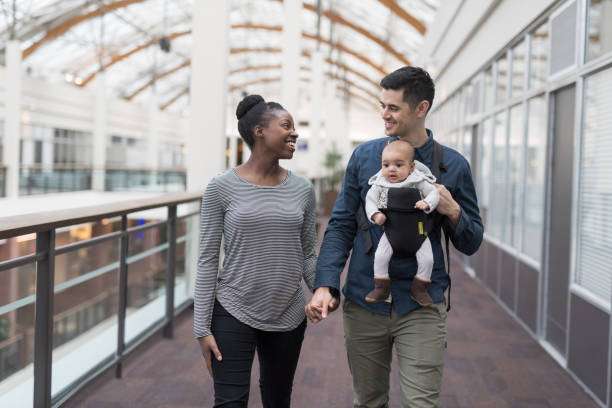
Of course, modern Eastern parents are also changing. With the accelerating pace of urban life, the prevalence of strollers and baby carriers has brought convenience and freedom. Yet, many young parents still prefer to use baby carriers in their daily lives—especially when commuting, traveling, or on short trips.
They aren’t blindly following tradition; rather, they’re seeking a balance between intimacy and efficiency. Some parents even share their “baby-carrying travel diaries” on social media, believing that the happiest moments are those of a child quietly cuddling with them, their hands free to move.
VI. Conclusion
The baby carrier may seem like a simple piece of fabric, but it carries profound cultural significance. It represents Eastern parents’ trust in intimacy and their emphasis on physical connection, reflecting a parenting philosophy passed down through generations.
While Western society advocates for children to learn independence as early as possible, Eastern parents believe that true independence often begins with a gentle embrace.