Parent-child hiking growth guide: How baby carriers help your baby’s physical and mental development

For many parents, exploring nature with their baby is both exciting and daunting. Mountain trails are often muddy or rugged, making strollers difficult to maneuver. This is when a suitable baby carrier becomes the perfect solution. Keeping babies close to their parents not only provides a sense of security but also allows them to observe and experience the world around them. Research and experience show that using a baby carrier appropriately for outdoor hikes not only promotes a baby’s physical development but also offers numerous psychological, cognitive, and emotional benefits.
Core muscle and balance training
Pediatric experts point out that babies in a carrier make subtle adjustments to their bodies as they follow their parents’ steps, and this natural movement helps develop core strength and balance. When parents walk across stone steps or gravel, babies unconsciously adjust their posture, like a “mini-physical exercise.” This movement has positive effects on postural control and spinal development.
Tip: During hiking, occasionally monitor your baby’s movements and provide gentle support to ensure safety while giving them moderate exercise.
Outdoor sensory stimulation and cognitive development
The sounds, smells, and colors of the mountains and forests are natural learning resources. Birdsong, the sound of water, the scent of earth, and the diverse flora all provide rich stimulation for baby’s sensory development. Psychological research shows that early exposure to diverse environments fosters cognitive flexibility and attention.
Parents can actively guide their children during hikes, such as pointing out small animals or softly describing natural phenomena. These interactions not only strengthen children’s observation skills but also cultivate language comprehension and cognitive abilities.
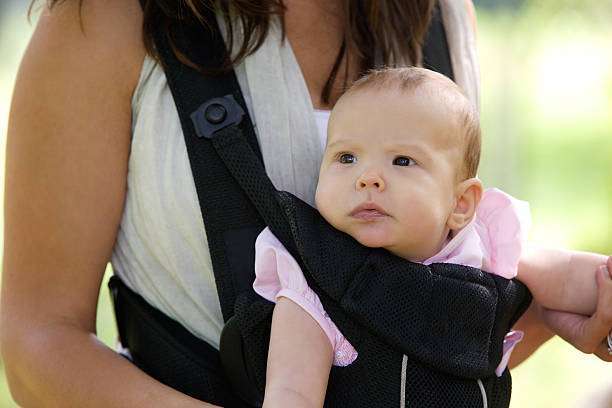
Secure attachment and emotion regulation
One of the greatest advantages of a baby carrier is that it helps babies maintain psychological stability in unfamiliar environments. By keeping close to their parents’ bodies, they maintain a secure base during their exploration. Psychologists emphasize that secure attachment is crucial for a baby’s long-term mental health.
During hikes, many babies quietly observe their surroundings rather than becoming anxious in unfamiliar surroundings. Even when encountering novel stimuli, such as distant hillsides or animals, they remain cheerful in their parents’ company. This sense of security often gives children greater confidence as they explore the world.
Safety tips for using a baby carrier
To ensure a smooth hiking experience, here are some common suggestions from experts and experienced parents:
Correct wearing : The shoulder straps and waist belt need to be adjusted properly to ensure that the baby’s chin is not pressed on the chest and the back maintains a natural curve.
Position switching : When going uphill, you can adopt the front holding position, while when going downhill or on flat roads, it is suitable for carrying the baby on the back, reducing the physical burden on parents.
Check regularly : Be sure to check the buckles before departure to ensure they are secure, and choose materials with good breathability to avoid prolonged stuffiness.
Pay attention to their status : Observe your baby’s complexion, body temperature and breathing at any time during the hike to ensure they are safe and comfortable.
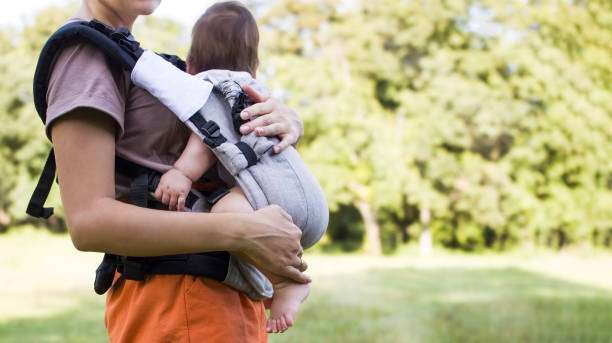
The dual value of parent-child hiking
Hiking isn’t just a learning opportunity for babies; it’s also a way for parents to exercise and relax. A baby’s first smell of earth, their first sight of a flowing stream, or even their imitating stepping over rocks in a baby carrier—these moments become cherished family memories.
Parents, meanwhile, can find relaxation and a sense of accomplishment while exploring with their baby. Every outdoor walk is a shared journey of growth and adventure for parents and children.
Conclusion
A baby carrier is not only a practical tool for parent-child hikes, but also a bridge for your baby’s growth. It provides a safe and comfortable environment for physical exercise, cognitive development, and a stronger sense of psychological security. For parents, the proper use of a baby carrier for outdoor activities not only enhances your baby’s growth opportunities but also allows for more heartwarming parent-child time. With proper safety and proper technique, parent-child hikes can become a healthy and joyful journey shared by the whole family.